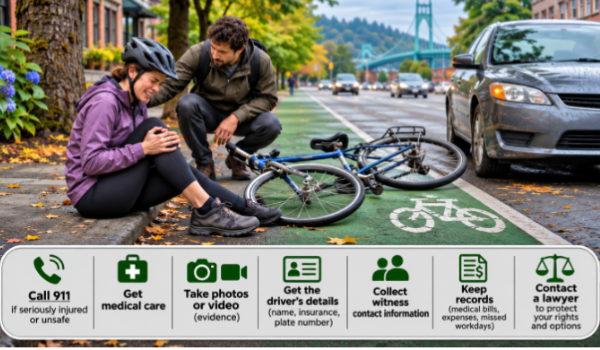
A bicycle crash can leave you wondering why a driver did not see you, or whether you were allowed to ride where the collision happened. The driver’s version does not settle who was responsible. A Portland bicycle accident lawyer can help you understand what Oregon law says and which details matter if you were hurt.
Start With Your Health and Safety
Move away from traffic if you can do so safely. Call 911 if someone is badly hurt or the scene is unsafe. Get medical care if you have head pain, dizziness, or other symptoms. Explain that you were biking.
A fall can cause injuries that are not obvious right away. If you hit your head, tell the doctor, even if you wore a helmet. Keep your damaged helmet and clothing as evidence.
If you can, get the driver’s name, insurance information, and license plate number. If you can, take a few photos of your bike, where the accident happened, and any injuries you can see. If someone saw the accident, ask for their name and phone number. Keep any police report number if officers respond. Avoid debating fault at the scene.
A business may have security video of the crash. Ask whether it can be saved before it is deleted. Write down the time, location, and direction you were riding while you remember them.
Drivers Must Watch for People on Bikes
Cyclists have legal rights on Portland roads. Oregon law generally gives people riding bicycles the same rights and responsibilities as drivers, unless a rule specifically says otherwise. Cyclists must follow applicable signals, but drivers must respect their right to share the road.
Drivers must yield to people riding in bicycle lanes. A driver turning across your lane may break that rule by cutting across your path. Oregon also requires drivers to pass cyclists safely and check before opening a car door into passing traffic. These rules protect people on bicycles, but breaking one does not automatically prove every part of a claim.
Imagine a driver turning right across a bike lane while you travel straight. Using a turn signal does not replace checking for a cyclist and yielding. Witnesses or camera footage may help show whether the driver looked before turning.
You Can Leave a Bike Lane for Safety
Oregon law does not always require you to stay in a bicycle lane. Exceptions include leaving to avoid broken glass or other hazards, pass someone, or prepare for certain turns. Portland also restricts sidewalk riding in parts of downtown, with specific exceptions. Riding outside a bike lane does not automatically make you responsible for a crash.
If you moved around a delivery truck or pothole, describe the obstacle and why you changed position. A photo of it may explain why you left the lane.
What if You Were Partly Responsible?
Oregon uses comparative fault. You can generally recover compensation if your share of fault is no greater than the combined share of the other legally responsible parties. Your payment is reduced by your percentage of fault. For example, if your damages total $20,000 and you are found 20% responsible, the adjusted amount would be $16,000 before other possible adjustments. If your share exceeds 50%, recovery is generally barred in a typical two-party case.
An insurer may claim you ignored a sign or moved suddenly into traffic. Ask what evidence supports that claim. A driver’s opinion alone does not decide the percentages.
You do not have to guess about your speed or what a driver saw. If you are unsure, say so. An accurate account matters more than estimates made immediately after a painful crash.
What Your Claim May Cover
Depending on the facts, you may seek compensation for reasonable medical bills, rehabilitation, missed earnings, damage to your bicycle, and pain caused by your injuries. You might find that your injuries are keeping you from working or doing things you normally wouldn’t think twice about. Keep your medical bills and receipts, and make a note of any days you couldn’t work. It also helps to write down things you’ve had trouble doing since the accident, even if they seem minor.
Before you accept a settlement, think about upcoming treatment and missed work. The first offer might not cover everything. Read the release carefully, because signing can prevent another claim for the same injuries.
Most Oregon personal injury lawsuits must be filed within two years, although some claims have different rules. Talking with an insurer does not automatically extend that deadline. If a public agency may be responsible, Oregon generally requires notice of an injury claim within 180 days, subject to exceptions. Get advice before recordings disappear or deadlines pass.
Getting Clear Answers After a Crash
You should not have to guess whether a driver’s insurance explanation is correct while dealing with injuries. RIZK Law can review the crash, explain how Oregon’s rules may affect your claim, and help you deal with questions from the insurer. Knowing what the evidence says can make your next decision easier.
Frequently Asked Questions
What if the Driver Left the Scene?
Call police and share the vehicle description or plate number if you have it. Insurance options depend on your coverage and the available evidence.
Can You Make a Claim Without a Witness?
Yes. Photos, medical records, vehicle damage, and nearby camera footage may help show what happened, even when nobody stopped to give a statement.
Must You Give a Recorded Statement?
Your own insurer may require cooperation. Before speaking on record with another person’s insurer, understand what is being requested and consider legal advice.
What if Your Pain Started the Next Day?
See a medical professional and describe when the symptoms appeared. Keep the visit notes and follow instructions about treatment or follow-up care.
Can You Claim for a Damaged Bicycle?
Potentially. Keep photos and a repair or replacement estimate. Recovering those costs depends on responsibility for the crash and the evidence.
What if You Were Riding a Rental Bike?
You may still have a claim. Save your original rental receipt and report the crash to the bike provider. Responsibility depends on what happened.