If you have ever listened to police scanners, watched crime shows, or heard officers speaking over the radio, you have probably heard mysterious phrases like:
- “10-4”
- “10-20”
- “10-7”
- “10-99”
These are called “ten codes,” and they have been used by law enforcement agencies across the United States for decades.
Ten codes help police officers communicate quickly, clearly, and efficiently during emergencies and routine calls. But many civilians — and even some new officers — are confused because the meanings can vary from one department to another.
Questions people often ask include:
- What do police ten codes mean?
- Is 10-4 really “message received”?
- Why do police use ten codes?
- Are ten codes still used today?
- What is the most important police radio code?
This guide explains the most common ten codes used in law enforcement, how they work, and why some agencies are moving away from them.
What Are Police Ten Codes?
Ten codes are short numeric radio communication codes used by law enforcement and emergency responders.
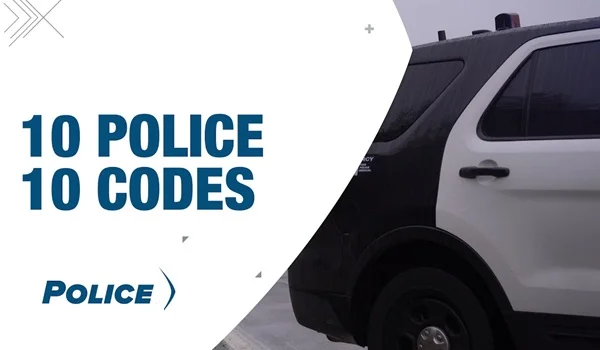
Instead of saying a full sentence over the radio, officers use shorthand codes beginning with “10.”
For example:
- “10-4” usually means “message received”
- “10-20” usually refers to location
- “10-7” often means out of service
These codes were designed to:
- Save radio time
- Improve clarity
- Reduce misunderstandings
- Communicate quickly during emergencies
Where Did Ten Codes Come From?
Police ten codes became popular in the mid-1900s as radio communication expanded.
Early police radios had:
- Poor audio quality
- Limited range
- Slow transmission systems
Using short standardized phrases helped reduce communication problems.
Many departments later adopted variations of the system.
Are Ten Codes the Same Everywhere?
No.
This is one of the biggest sources of confusion.
Different police departments may use different meanings for the same code.
For example:
- “10-13” could mean officer needs help in one agency
- But mean weather conditions in another
That is why many agencies now prefer plain language communication during major emergencies.
Common Police Ten Codes and Their Meanings
Here are some of the most widely recognized law enforcement ten codes.
| Ten Code | Common Meaning |
| 10-1 | Poor radio signal |
| 10-4 | Message received / understood |
| 10-7 | Out of service |
| 10-8 | In service |
| 10-9 | Repeat message |
| 10-13 | Officer needs assistance |
| 10-20 | Location |
| 10-22 | Disregard |
| 10-27 | Driver’s license information |
| 10-28 | Vehicle registration check |
| 10-33 | Emergency traffic only |
| 10-36 | Correct time |
| 10-42 | Officer ending tour of duty |
| 10-99 | Wanted or stolen indicated |
Remember: meanings can vary by department.
Most Famous Police Ten Codes
10-4 — “Message Received”
Probably the most famous police code in America.
People often use “10-4” casually to mean:
- “Okay”
- “Understood”
- “Got it”
The phrase became part of pop culture through movies, TV shows, and CB radio culture.
10-20 — “What’s Your Location?”
Officers commonly use this code to ask:
- Where are you?
- What is your location?
Example:
“Unit 12, what’s your 10-20?”
10-7 and 10-8
10-7
Usually means:
- Out of service
- Off duty
- Unavailable
10-8
Usually means:
- Back in service
- Available for calls
10-33 — Emergency Traffic
This code often signals:
- Radio silence for emergencies
- Critical officer safety situations
When “10-33 traffic” is declared, routine radio chatter may stop immediately.
Why Police Use Radio Codes
Ten codes provide several advantages.
Faster Communication
Short codes reduce radio time.
More Professional Communication
Codes help standardize communication procedures.
Public Privacy
Using codes may reduce public understanding during sensitive situations.
High-Stress Situations
During emergencies, short phrases can improve efficiency.
Why Some Agencies Are Moving Away From Ten Codes
After major national emergencies, many agencies realized different code systems created confusion between departments.
As a result, some agencies now prefer:
- Plain English communication
- Standardized emergency language
For example:
Instead of saying:
“10-13!”
an officer might simply say:
“Officer needs immediate assistance.”
This can improve coordination during:
- Multi-agency incidents
- Natural disasters
- Large emergencies
Federal Recommendations on Plain Language
Organizations like:
- Federal Emergency Management Agency
- Department of Homeland Security
have encouraged clearer communication standards during major incidents.
Many departments now combine:
- Traditional ten codes
- Plain language systems
depending on the situation.
Police Scanner Culture and Ten Codes
Many civilians enjoy listening to police scanners.
Ten codes became especially popular among:
- Radio hobbyists
- Journalists
- Truck drivers
- Emergency enthusiasts
Scanner listeners often learn local code systems to understand police activity better.
Other Law Enforcement Communication Codes
Police also use:
- Signal codes
- Penal code references
- Status codes
- Dispatch shorthand
Examples may include:
- “Code 3” for lights and sirens response
- “Signal 100” for radio lockdown
- State-specific criminal statute references
Again, meanings vary heavily by agency.
Common Myths About Police Ten Codes
“All Police Use the Same Codes”
False.
There is no fully universal national system.
“Ten Codes Are Secret”
Not really.
Most codes are publicly known.
“Police Only Use Numbers”
Modern police communication often mixes:
- Plain English
- Codes
- Computer dispatch systems
Ten Codes in Movies and TV Shows
Hollywood helped make police codes famous.
Popular police dramas often feature:
- Rapid radio chatter
- “10-4”
- Emergency dispatch scenes
However, TV shows sometimes:
- Use inaccurate codes
- Exaggerate police procedures
- Invent fictional radio systems
Most Important Ten Codes for Civilians to Recognize
If you hear police radio traffic, these are among the most recognizable codes:
| Code | Common Meaning |
| 10-4 | Understood |
| 10-20 | Location |
| 10-9 | Repeat |
| 10-33 | Emergency traffic |
| 10-7 | Out of service |
| 10-8 | Back in service |
How Modern Technology Changed Police Communication
Today, officers often use:
- Digital radio systems
- Mobile computers
- GPS tracking
- Encrypted communications
This reduced dependence on older radio shorthand systems in some agencies.
Still, ten codes remain deeply connected to police culture.
Frequently Asked Questions
Q: What does 10-4 mean in police language?
A: Usually “message received” or “understood.”
Q: What is a 10-20?
A: Typically a request for location.
Q: Do all police departments use ten codes?
A: Many do, but systems vary widely.
Q: Are ten codes still used today?
A: Yes, though some agencies increasingly use plain language communication.
Q: Why are police radio codes different everywhere?
A: Departments developed their own systems over time based on local needs.
Final Thoughts
Police ten codes are one of the most recognizable parts of law enforcement communication in the United States. Originally created to improve radio efficiency and clarity, these shorthand codes became deeply embedded in police culture and public imagination.
Although many agencies now use more plain-language communication during large emergencies, ten codes still remain common in everyday law enforcement operations across the country.
For civilians, understanding basic police radio codes can make scanner traffic, crime shows, and real-world emergency communication much easier to follow — even if the exact meanings sometimes change from one department to another.