
Your child has outgrown the car seat with straps. They’re asking for a “big kid” seat. Maybe their friends have already stopped using boosters.
This stage feels simple. It isn’t. Booster seats are easy to buy and just as easy to use wrong. A booster that fits poorly can leave a child almost as exposed as no booster at all.
Here’s what Georgia parents need to know about choosing the right booster, fitting it properly, and knowing when it’s truly time to move on.
Why Boosters Matter So Much
Adult seat belts are designed for adult bodies. On a small child, they sit in the wrong places.
Without a booster:
- The lap belt rides up over the soft belly instead of the hip bones
- The shoulder belt cuts across the neck or face
- Kids often tuck the shoulder belt behind their back because it’s uncomfortable
In a crash, that poor fit can lead to serious stomach, spine, and neck injuries. A booster simply lifts your child so the adult belt fits the way it should.
What Georgia Law Requires
Georgia’s rule is short, but parents often misunderstand it.
In general:
- Children under 8 must ride in the back seat
- They must be secured in a car seat or booster suited to their height and weight
- A child under 8 who is taller than 4’9″ (57 inches) may use a regular seat belt instead
The Governor’s Office of Highway Safety lists the full Georgia seat belt and child restraint laws if you want the exact wording. For a parent-friendly breakdown of the rules and exceptions, see this guide to Georgia booster seat laws.
Remember this, though. The law sets the minimum. Turning 8 doesn’t mean your child is ready for a seat belt alone.
Is Your Child Ready for a Booster?
Don’t rush the move out of a harnessed seat. A five-point harness protects better than a booster.
Your child may be ready for a booster when:
- They’ve reached the top height or weight limit of their forward-facing harness seat
- They’re mature enough to sit upright the whole ride, without slouching or leaning
- They won’t unbuckle or play with the belt
That last point gets overlooked. A booster only works if the child stays in position. A wiggly four-year-old is often safer in a harness for a while longer.
High-Back vs. Backless: Which One to Choose
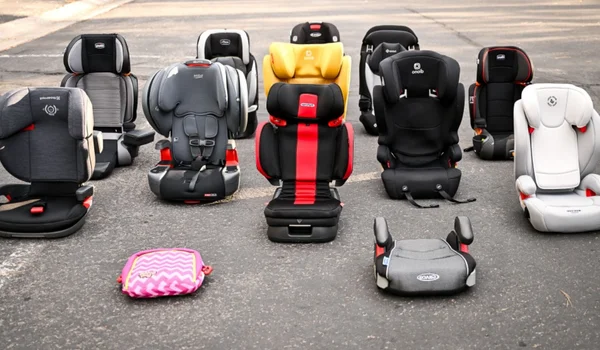
There are two main types of booster seats. Both can be safe when used correctly.
High-back boosters
- Have a built-in guide that positions the shoulder belt
- Offer head support for kids who fall asleep in the car
- Are the better choice if your vehicle has low seat backs or no headrests
Backless boosters
- Are lighter, cheaper, and easy to move between cars
- Work well for older kids who already sit up properly
- Need a vehicle headrest behind the child’s head
Many families start with a high-back booster and switch to backless later. Some combination seats convert from one to the other.
A few more buying tips:
- Check the label for the height and weight limits
- Look for the manufacture date and expiration date
- Avoid used seats unless you know their full history, including any crashes
- Never use a booster with a lap-only belt. Boosters need a lap-and-shoulder belt.
How to Fit It Correctly
Getting the fit right takes about a minute. Do it each time your child gets in, especially in a new vehicle.
Check these points:
- The lap belt lies low and snug across the upper thighs, not the belly.
- The shoulder belt crosses the middle of the shoulder and chest, away from the neck.
- The child’s back rests against the booster or vehicle seat.
- The belt is never placed behind the back or under the arm.
A few extra habits help too:
- Buckle an empty booster in place so it doesn’t fly around in a sudden stop
- Take off puffy winter coats, which create slack in the belt
- Use the back seat every time
If the shoulder belt still sits on the neck, adjust the belt guide or try a different booster. Not every booster fits every car.
The 5-Step Test: When Can They Stop Using a Booster?
This is the question every parent asks. The answer depends on fit, not age.
Have your child sit in the car without a booster. Then check:
- Does their back sit flat against the vehicle seat?
- Do their knees bend naturally at the seat’s edge?
- Does the shoulder belt cross between the neck and shoulder?
- Does the lap belt sit low, touching the thighs?
- Can they stay seated like this for the whole trip, even asleep?
If the answer to any question is “no,” keep the booster. Most kids don’t pass until they reach about 4’9″. For many, that happens somewhere between ages 8 and 12.
Test again in each vehicle your child rides in. A child may pass in an SUV but fail in a small sedan.
Common Mistakes Georgia Parents Make
Even careful parents slip up. Watch out for these:
- Moving to a booster too early
- Dropping the booster as soon as the child turns 8
- Letting kids ride up front before age 13
- Forgetting the booster in a grandparent’s car or the carpool
- Using a booster that has already been in a crash
Get a Free Expert Check
Not sure you’ve got it right? You don’t have to guess.
Certified Child Passenger Safety Technicians (CPSTs) check car seats and boosters across Georgia, often for free. Many fire stations, hospitals, and local health departments host check events. A 15-minute visit can give you real peace of mind.
The Bottom Line
A booster seat is a small, inexpensive tool. Used the right way, it does a big job.
Choose a seat that fits your child and your car. Check the belt fit every ride. And let the 5-step test, not a birthday, decide when it’s time to move on. Your child may complain now. They’ll be safer for it.