
Gun laws in Texas have changed significantly in recent years, especially regarding concealed carry. Many residents and visitors are confused about whether a permit is still required, where firearms are prohibited, and what happens during police encounters.
Questions like these are extremely common:
- Can you carry a handgun in Texas without a license?
- What places prohibit concealed carry?
- Can businesses ban firearms?
- Are non-residents allowed to carry in Texas?
- What happens if you carry illegally?
Texas is considered one of the more gun-friendly states in the U.S., but that does not mean there are no rules. Violating concealed carry laws can still lead to criminal charges, fines, or loss of firearm rights.
This guide explains Texas concealed carry laws in simple language so gun owners can better understand their rights and responsibilities.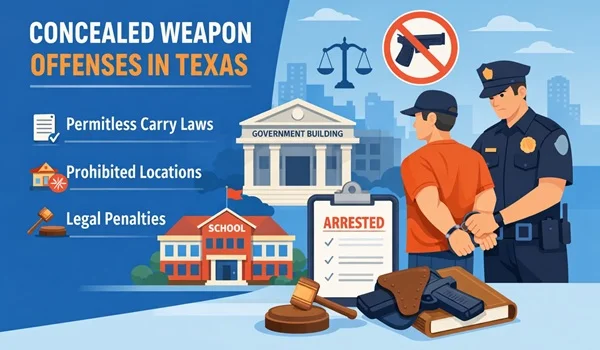
Is Concealed Carry Legal in Texas?
Yes.
Texas allows many adults to carry handguns openly or concealed under what is commonly called “constitutional carry” or “permitless carry.”
This means many people can legally carry a handgun without obtaining a license.
However, important restrictions still apply.
What Is Permitless Carry in Texas?
Texas passed legislation allowing eligible individuals to carry handguns without a License to Carry (LTC).
Generally, a person may carry without a permit if they:
- Are at least 21 years old in most situations
- Can legally possess a firearm under state and federal law
- Are not prohibited due to certain criminal convictions or legal restrictions
Even without a permit requirement, Texas firearm laws remain complex.
Texas Concealed Carry Requirements
Although Texas allows permitless carry, not everyone qualifies.
People Who May Be Restricted From Carrying
Certain individuals may be prohibited from carrying firearms, including some people with:
- Felony convictions
- Certain domestic violence convictions
- Active protective orders
- Specific criminal charges
- Federal firearm restrictions
Federal law still applies in Texas.
License to Carry (LTC) in Texas
Even though permits are no longer required for many people, some Texans still choose to obtain a License to Carry.
An LTC may provide advantages such as:
- Reciprocity with other states
- Simpler firearm purchases in some situations
- Additional legal protections in certain cases
The license is issued through the Texas Department of Public Safety.
Concealed Carry vs Open Carry in Texas
Concealed Carry
The handgun is hidden from ordinary view.
Examples:
- Inside waistband holster
- Purse carry
- Jacket-covered holster
Open Carry
The handgun is visible, usually in a holster.
Texas allows both concealed and open carry for eligible individuals.
Places Where Concealed Carry Is Prohibited in Texas
Even with permitless carry or an LTC, firearms are prohibited in certain locations.
Common Restricted Locations Include:
- Schools and school events
- Courtrooms
- Polling places during elections
- Secure airport areas
- Certain government buildings
- Racetracks
- Correctional facilities
Federal buildings may also prohibit firearms.
Violating location restrictions can lead to serious criminal penalties.
Texas 30.06 and 30.07 Signs Explained
Texas businesses can prohibit firearms through legally compliant signs.
30.06 Signs
Prohibit concealed carry by licensed carriers.
30.07 Signs
Prohibit open carry.
Businesses must follow strict wording and formatting requirements for signs to be legally enforceable in many situations.
Ignoring valid firearm restriction signs may lead to trespassing charges.
Can Private Businesses Ban Guns in Texas?
Yes.
Private property owners generally have the right to prohibit firearms on their property.
Examples may include:
- Restaurants
- Retail stores
- Offices
- Entertainment venues
Always pay attention to posted signage.
Carrying Firearms in Vehicles in Texas
Texas generally allows eligible individuals to carry handguns inside personal vehicles.
The firearm may often be:
- Concealed in the vehicle
- Carried without a permit if lawful possession applies
However:
- Certain criminal activity
- Gang involvement
- Illegal firearm possession
can still create serious legal issues.
Do You Have to Tell Police You Are Carrying?
Texas law generally does not require permitless carriers to voluntarily announce firearm possession during police encounters.
However:
- LTC holders may have additional obligations in some situations
- Officers may ask about weapons during traffic stops
Remaining calm and cooperative is usually the safest approach.
Can Non-Residents Carry in Texas?
Possibly.
Texas recognizes many out-of-state concealed carry licenses through reciprocity agreements.
Non-residents may also qualify for permitless carry under Texas law if they meet legal requirements.
Travelers should always review:
- Texas law
- Their home state’s laws
- Reciprocity rules
before carrying across state lines.
Traveling With Firearms Through Texas
When traveling:
- Keep firearms secured
- Understand local restrictions
- Avoid prohibited locations
- Follow airline rules when flying
Interstate firearm transportation can involve both state and federal laws.
Self-Defense and Stand Your Ground Laws in Texas
Texas has broad self-defense protections in some situations.
The state recognizes concepts related to:
- Self-defense
- Defense of others
- Defense of property in limited circumstances
Texas also has laws commonly associated with “Stand Your Ground” and the “Castle Doctrine.”
However, using deadly force can still trigger:
- Criminal investigations
- Civil lawsuits
- Arrests
Every self-defense case depends heavily on facts and circumstances.
What Happens if You Carry Illegally in Texas?
Illegal firearm possession may lead to:
- Arrest
- Criminal charges
- Fines
- Jail time
- Loss of firearm rights
Penalties depend on factors such as:
- Criminal history
- Location
- Type of weapon
- Intent
- Whether another crime occurred
Common Mistakes Gun Owners Make
- Assuming Permitless Carry Means “No Rules”
Texas still has many firearm restrictions.
- Ignoring Posted Signs
Valid signage can create criminal liability.
- Carrying Into Prohibited Areas
Schools and government buildings are common trouble spots.
- Crossing State Lines Without Checking Laws
Gun laws vary dramatically between states.
- Mishandling Firearms During Police Stops
Sudden movements or poor communication can escalate situations.
Should You Still Get a Texas LTC?
Many firearm owners still choose licensing because it may offer:
- Reciprocity benefits
- Training
- Faster firearm purchases in some cases
- Better understanding of firearm law
Training can also reduce accidental legal violations.
Important Safety Considerations
Legal carry does not automatically mean safe carry.
Responsible firearm owners should:
- Use secure holsters
- Store firearms safely
- Avoid mixing guns and alcohol
- Seek firearm safety training
- Understand use-of-force laws
Legal mistakes involving firearms can have life-changing consequences.
Frequently Asked Questions
Q: Can you carry concealed in Texas without a permit?
A: Yes, many eligible adults can legally carry without a permit under Texas law.
Q: Is open carry legal in Texas?
A: Yes, for many lawful firearm owners.
Q: Can businesses prohibit guns?
A: Yes. Private property owners can restrict firearms under certain rules.
Q: Are guns allowed in bars?
A: Firearm restrictions involving alcohol-serving establishments can be complicated and depend on licensing and signage.
Q: Can felons carry firearms in Texas?
A: Generally no, though limited exceptions may exist in some situations after certain time periods.
Final Thoughts
Texas concealed carry laws have become more permissive in recent years, but gun owners still need to understand the rules carefully. Permitless carry does not eliminate restrictions on prohibited locations, criminal eligibility, or self-defense laws.
The safest approach is responsible firearm ownership combined with proper legal knowledge and training. Whether you are a Texas resident or a visitor traveling through the state, understanding concealed carry laws can help you avoid criminal charges, protect your rights, and handle firearms more responsibly.