Why the most ordinary moment of your commute is the most dangerous, and what it takes to be paid fairly for it.
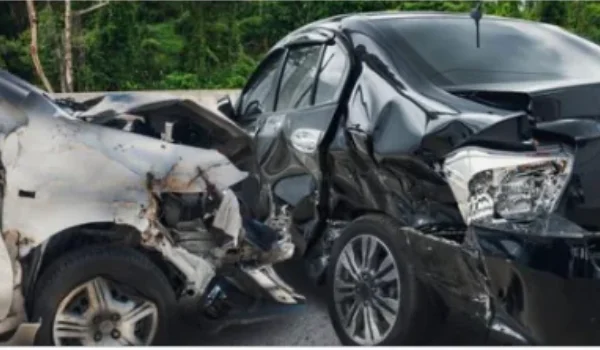
An intersection crash does not feel like an accident. It feels like an interruption. One moment you are watching the light at Pratt and Light, thinking about parking, dinner, the next exit. Four seconds later, there is glass in your lap, an airbag in your face, and a stranger’s bumper where your door used to be. Intersections are where Baltimore traffic concentrates everything that makes driving dangerous: turning cars, crossing pedestrians, buses, bikes, and drivers in a hurry, all sharing the same few square yards. When it goes wrong there, the question a Baltimore intersection car accident lawyer has to answer is never simple, because in a crossing, everyone arrives with a story about a green light.
The Geometry of a Crash: Why Intersections Invite Disaster
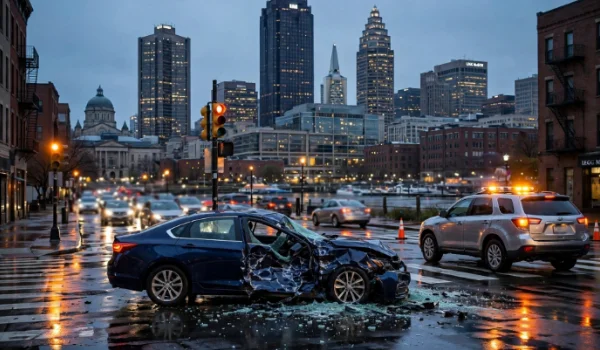
A Maryland Department of Transportation study of Baltimore’s most dangerous intersections reads like a map of ordinary commutes: West Franklin Street at North Payson Street, Orleans Street at Ensor Street, West North Avenue at Fulton and at Howard. These are not obscure back roads. They are the wide, busy crossings Baltimore drives through every single day.
The study found the same ingredients again and again. Roads of four lanes or more. Heavy traffic, often over twenty thousand vehicles a day. Left turn lanes without a protected green arrow to make turning safe. Modest thirty mile per hour speed limits that nobody’s schedule respects. Intersections fail by design first, and by driver second.
The Four Ways These Collisions Happen
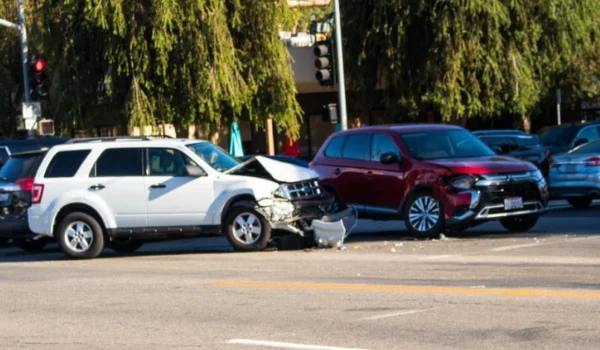
A Baltimore intersection car accident lawyer sorts these cases into four recurring patterns. The left turn across traffic, where a driver misjudges a gap and turns into the path of a car with the right of way. The right turn into a lane already occupied by a car, a cyclist, or a motorcycle the driver never looked for.
The rear end collision at the signal, when a driver following too closely or looking at a phone cannot stop for the light. And the signal runner, the driver who treats a red light or a stop sign as a suggestion. Four patterns, four very different evidence fights, because each one points the finger of fault in a different direction.
Fault Is a Fight in Maryland Like Almost Nowhere Else
Here is the law that makes these cases unforgiving. Maryland follows contributory negligence, which means if you are found even slightly at fault for your own crash, you can be barred from recovering anything at all. That is why a Baltimore intersection car accident lawyer treats the fault question as the whole case, from the first photograph to the final argument.
Insurers know this rule well and use it accordingly. A suggestion that you were speeding, distracted, or entered a moment too late is not small talk: it is an attempt to end your claim entirely. Skilled counsel answers with evidence, and sometimes with the last clear chance doctrine, which asks who had the final opportunity to avoid the collision and failed to take it.
Evidence Lives at the Scene for About a Day
Intersection evidence is perishable. Skid marks fade, damaged cars are repaired or scrapped, witnesses who saw the light change scatter to their lives, and camera footage from nearby businesses and traffic systems is recorded over on short cycles. What exists on the day of the crash may simply not exist by the end of the month.
Greenberg Law Offices investigates promptly for exactly that reason, recovering critical evidence before it can be lost and identifying everyone at fault, which sometimes includes parties beyond the driver who hit you. In intersection cases, the strongest claims are usually the ones that were documented first, not the ones that were argued loudest.
What Your Claim Should Honestly Count
A fair claim counts more than the emergency room invoice. It includes the treatment still ahead of you, the therapy, the follow up care, and the possibility that your injuries will limit your work or reduce what you can earn in the years to come. Intersection impacts are often side impacts, and side impacts are notoriously unkind to necks, shoulders, hips, and heads.
It also counts what never appears on a bill: the pain, the disturbed sleep, the driving anxiety at every crossing that follows, the family activities quietly missed. Maryland law allows compensation for pain, suffering, and diminished quality of life alongside medical costs, lost income, and vehicle damage, but only for the claimant who documents and demands them properly.
Three Years on the Calendar, but the Clock Runs Faster
Maryland gives you three years from the date of the accident to file a personal injury lawsuit, and missing that deadline can end even a strong case before it is heard. On paper, three years sounds generous. In practice, the deadline that matters is much sooner: the days when the evidence is still standing at the scene.
Waiting has another cost. Memories soften, stories harden, and the insurer’s version, built in the first week, becomes the default truth everyone else has to dislodge. Starting early does not mean rushing into a settlement. It means investigating while investigation is still possible, and negotiating from a file instead of from a fading recollection.
Six Decades of Standing Up in Baltimore Courtrooms
Greenberg Law Offices has represented injured Marylanders for more than sixty years, recovering millions for clients, including a $1.2 million verdict at trial in an auto accident case. Results like that do not happen by accident. They come from preparing every case as if a jury will decide it, and from knowing the local courts because the firm has stood in them for decades.
If a crossing in this city changed your life in four seconds, you deserve more than an adjuster’s first offer and a deadline you discovered too late. Talk to a Baltimore intersection car accident lawyer at Greenberg Law Offices, at (410) 539-5250, for a free consultation, and find out what your claim is actually worth before the evidence, and the calendar, decide for you.