
Severe storms damage property somewhere in the United States almost every week of the year, and for millions of homeowners, that means the same next step: filing an insurance claim.
It’s a more common experience than most people realize. About one in 18 insured homes files a claim in any given year, and property damage makes up nearly all of that activity, close to 97 percent, according to the Insurance Information Institute (Triple-I). Wind and hail alone are behind roughly one in every 35 of those claims, making them the single most common cause of homeowners insurance claims nationwide.
And that exposure is only growing. In 2025 alone, the U.S. saw 23 separate billion-dollar weather disasters, including a record 21 events driven by severe storms, according to Climate Central. Storms are getting more frequent, more damaging, and more expensive to recover from.
Yet filing a claim doesn’t guarantee it gets paid in full. The damage is often real and significant, but the insurer disputes when it happened or how bad it actually was, and that gap, more often than not, comes down to evidence. This guide walks through exactly what that evidence looks like: the types of storm-related claims homeowners file, how insurers investigate them, and what separates a claim that holds up from one that doesn’t.
Why Property Damage Claims Get Denied or Underpaid
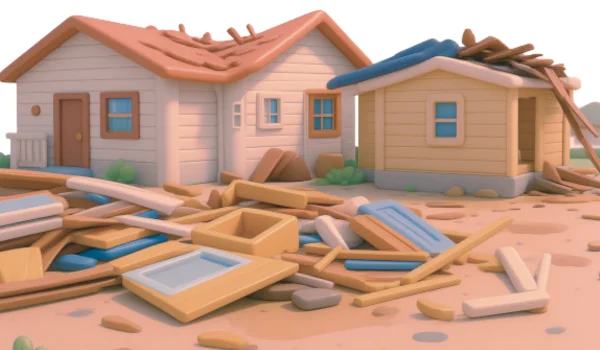
When it comes to insurance plans, the burden of proof is with the individual filing the claim. The claimant must prove that the loss is what the policy genuinely guarantees to pay, that the damage was caused by a covered incident, and that it happened during the insurance period. Merely demonstrating the presence of damage is insufficient. It is rare for insurers to contest that a storm occurred in the area. The details are the point of discussion. Was this specific damage pre-existing, or did it result from the wind? Was the roof simply old and badly maintained, or did hail cause damage? Was it caused by flooding, a risk that is usually not covered by regular homeowners insurance? Each of those questions turns on evidence, and the strength of that evidence usually decides whether a claim is paid, reduced, or denied outright.
Types of Property Damage Claims Caused by Severe Storms
Severe weather causes a wide range of property damage claims, and the type of storm usually dictates what evidence will be crucial.
- Wind and windstorm claims most often involve roofing, siding, fencing, and downed trees and require proof of wind speed and direction at the specific location and time.
- Hail claims turn on distinguishing genuine impact damage to roofing, siding, and HVAC equipment from ordinary wear, and radar-based hail-swath data is often the deciding factor.
- Flood and heavy-rain claims raise a coverage question even before evidence comes into play because damage from flooding is typically excluded from standard homeowners’ policies and needs separate flood insurance.
- In tornado claims, the damage is catastrophic and a total loss. The argument is not so much about how it happened but the extent and valuation.
- Hurricane claims are often the most contested, because a single storm can produce both wind damage (usually covered) and storm surge or flood damage (often excluded or separately covered)—separating the two after the fact is exactly the kind of question forensic weather reconstruction is built to answer.
How Insurers Categorize and Investigate These Claims
When a claim is filed, insurers don’t just take the homeowner at their word. Adjusters examine the scope of the damage and how it happened, often drawing a distinction between direct property damage, the actual physical harm such as a broken roof or shattered window, and consequential damage that develops later, such as mold from a wind-driven roof leak or lost business from a damaged storefront. Understanding these types of property damages matters, because insurers frequently evaluate and pay them differently, and claimants who don’t separately document the secondary losses can end up underpaid even when the primary claim is approved.
When more than one peril occurs in a single event, most often hurricanes, insurers often bring in independent experts to determine how much of the damage came from wind and how much from flooding, since coverage often differs between the two. This is where forensic meteorology enters the claims process directly. I reconstruct the storm’s timeline at the specific property using tools like NEXRAD Level II Dual-Pol radar data, surface observation records, and validated historical weather databases. The goal is simple: pinpoint exactly when wind speeds became damaging, and how that compares to when storm surge or flooding actually arrived. That sequencing is often the one detail that determines how a claim gets paid.
Core Evidence That Supports a Claim
Whatever the peril, several categories of evidence consistently strengthen a property damage claim:
- Contemporaneous documentation: Dated photos and video taken as soon as it’s safe, along with written notes on what was observed and when.
- Repair estimates and licensed contractor reports: establish both the scope and the cost of the damage.
- Policy records and proof of prior condition: past inspection or maintenance records that help rule out the “pre-existing damage” argument insurers frequently raise.
- Independent weather and meteorological data: When a claim depends on whether wind, hail, or another specific storm condition was present at the property at a given time, generic regional weather station data is often not enough. A site-specific forensic reconstruction, cross-referencing radar, satellite, and historical weather databases, provides an objective account that doesn’t depend on anyone’s memory of the event.
- Third-party expert reports: In general, reports based on a stated, repeatable methodology will be more persuasive in a disagreement than an adjuster’s opinion alone, especially if the claim is heading for litigation or appraisal, where the study must meet a Daubert standard.
- A clear timeline and correspondence log: Recording the date damage was discovered, when it was reported to the insurer, and every subsequent communication helps counter arguments that a claim was filed late or that circumstances changed between the loss and the inspection.
H2: Where Claims Fall Apart: Common Evidentiary Gaps
- “Storm in progress” disputes, where an insurer argues the damage occurred outside the policy’s coverage window or during a separate, unrelated event.
- Pre-existing damage arguments, where insurers attribute the condition to age or prior wear rather than the storm itself.
- Reliance on generic, regional weather data, such as readings from the nearest airport or a standard weather app forecast, that doesn’t reflect actual conditions at the property, especially for highly localized events like hail swaths or microbursts.
- Damage that goes undocumented or is reported well after the fact, giving the insurer room to question whether it happened as described.
Building a Claim That Holds Up
Homeowners and businesses can meaningfully improve their odds by treating documentation as a priority from the moment damage is discovered, not as an afterthought once a claim is disputed. That means photographing and describing damage immediately, keeping every estimate and communication in writing, and bringing in an independent weather and climate expert early, before a dispute escalates, rather than waiting until after a denial to challenge it.
This matters most in claims involving multiple perils or a disputed timeline, where the difference between a paid claim and a denied one often isn’t the extent of the damage but how well the sequence of events can be proven after the fact. For claims where the source of the damage or the timing is contested, that’s typically the point to bring in a certified forensic meteorologist—not after a denial has already been issued.
Conclusion
Severe storms aren’t slowing down, and neither is the volume of property damage claims they generate. The claims that come out ahead share the same foundation: real documentation, verified data, and a clear account of when and how the damage actually happened. Whether the loss involves a single, clear-cut wind claim or a more complicated hurricane case where wind and water both played a role, it’s the evidence, not the argument, that ultimately decides whether a claim gets paid fairly.
Frequently Asked Questions
What is the strongest evidence for a wind or hail damage claim?
Site-specific documentation paired with independent data, such as radar-verified wind speeds or hail-swath analysis, tends to carry the most weight, since it doesn’t rely on memory or estimation after the fact.
Do I need an expert report for every property damage claim?
Not necessarily. Straightforward, undisputed claims often resolve with standard documentation and a contractor estimate. Expert analysis becomes valuable when the source of the damage, timing, or scope of loss is disputed or when multiple perils are involved.
Why would an insurer dispute damage that clearly exists?
Insurers frequently don’t dispute that damage occurred; they dispute what happened, when it happened, and whether that specific event is covered under the policy, which is why this kind of evidence matters as much as proof of the damage itself.
Can weather data really change the outcome of a claim?
Yes. In many hurricane and hail claims, the outcome depends less on whether damage happened and more on precisely when and how it happened, which is exactly what a forensic weather reconstruction is designed to establish.
About the Author
John Bryant is a triple-certified forensic meteorologist (AMS, NWA, EPA) with more than 30 years of experience, including service as a Chief Meteorologist, and now provides independent weather reconstruction and expert witness analysis for property damage, insurance, and litigation cases nationwide. Learn more at weatherandclimateexpert.com.
Sources
Insurance Information Institute (Triple-I), “Facts + Statistics: Homeowners and Renters Insurance”: https://www.iii.org/fact-statistic/facts-statistics-homeowners-and-renters-insurance
Climate Central, “2025 in Review: U.S. Billion-Dollar Disasters”: https://www.climatecentral.org/climate-matters/2025-in-review