Weight-loss medications have exploded in popularity across the United States, and one of the most talked-about drugs is Wegovy. While many patients report significant weight loss benefits, lawsuits involving Wegovy and similar GLP-1 medications have also started gaining national attention.
People searching online are asking questions like:
- Is there a Wegovy lawsuit?
- What side effects are involved?
- Can patients sue over stomach problems or injuries?
- What compensation are people seeking?
- Is Wegovy dangerous?
The situation is still developing, but several legal claims involving serious gastrointestinal complications and other alleged side effects have already been filed against manufacturers of GLP-1 weight-loss drugs.
This guide explains the Wegovy lawsuit situation in plain English, including the allegations, possible injuries involved, who may qualify for claims, and what patients should know before taking legal action.
What Is Wegovy?
Wegovy is a prescription medication approved for chronic weight management.
It contains:
- Semaglutide
the same active ingredient found in:
- Ozempic
Wegovy works by mimicking hormones that:
- Reduce appetite
- Slow stomach emptying
- Help regulate blood sugar
The medication is manufactured by:
- Novo Nordisk
Why Are People Filing Wegovy Lawsuits?
Most lawsuits focus on allegations that patients suffered severe side effects and claim drug manufacturers:
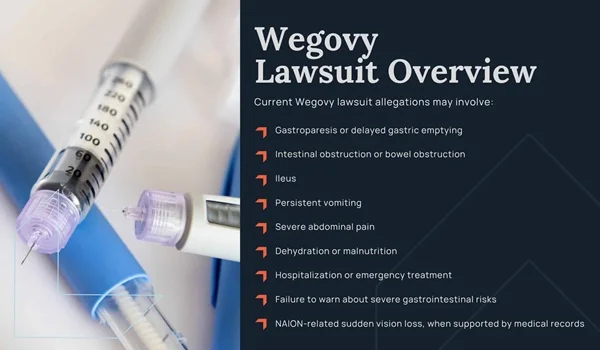
- Failed to adequately warn about risks
- Downplayed certain complications
- Did not provide enough safety information
Many lawsuits involve gastrointestinal injuries allegedly connected to delayed stomach emptying.
Main Side Effects Mentioned in Wegovy Lawsuits
Several legal claims involve severe digestive system problems.
Commonly alleged injuries include:
- Gastroparesis (stomach paralysis)
- Severe vomiting
- Intestinal blockage
- Persistent nausea
- Gallbladder problems
- Pancreatitis
Not every patient experiences these issues, but lawsuits argue some side effects may be more serious or long-lasting than expected.
What Is Gastroparesis?
Gastroparesis is one of the biggest concerns appearing in many GLP-1 drug lawsuits.
It is a condition where:
- The stomach empties very slowly
- Food remains in the stomach longer than normal
Symptoms may include:
- Severe nausea
- Vomiting
- Bloating
- Pain
- Difficulty eating
In serious cases, people may require hospitalization or ongoing treatment.
Why Wegovy May Affect Digestion
Wegovy intentionally slows digestion as part of its weight-loss mechanism.
That slower stomach emptying helps people:
- Feel full longer
- Eat less food
However, some lawsuits claim the slowing effect became excessive or dangerous in certain patients.
Common Allegations in Wegovy Lawsuits
| Allegation | What Plaintiffs Claim |
| Failure to warn | Patients were not fully warned about severe stomach risks |
| Defective design | The drug allegedly creates unreasonable risks |
| Inadequate labeling | Safety information was allegedly incomplete |
| Negligence | Manufacturer allegedly failed to act responsibly |
| Financial damages | Patients suffered medical costs and lost income |
The manufacturer disputes many allegations, and litigation is ongoing.
Are Wegovy and Ozempic Lawsuits Connected?
Often yes.
Because both medications contain semaglutide, lawsuits involving:
- Wegovy
- Ozempic
- Other GLP-1 drugs
are frequently discussed together.
Some legal cases involve multiple medications within the same category.
Are These Lawsuits Class Actions?
Most personal injury drug lawsuits are usually not traditional class actions.
Instead, they often become:
- Individual lawsuits
- Mass tort litigation
- Multidistrict litigation (MDL)
An MDL allows similar cases to be handled more efficiently in federal court while keeping individual claims separate.
Who May Qualify for a Wegovy Lawsuit?
Potential claimants may include people who:
- Used Wegovy or related GLP-1 medications
- Developed severe gastrointestinal injuries
- Required hospitalization or major treatment
- Experienced long-term complications
Every case depends on:
- Medical records
- Timing
- Diagnosis
- Drug usage history
Not everyone who used Wegovy qualifies for a lawsuit.
What Compensation Are Plaintiffs Seeking?
Possible damages may include:
- Medical expenses
- Lost income
- Pain and suffering
- Long-term treatment costs
- Emotional distress
The value of claims varies heavily depending on injury severity.
Has Wegovy Been Recalled?
As of now, legal claims do not automatically mean the drug has been recalled.
A lawsuit alone does not prove:
- A medication is unsafe for everyone
- The manufacturer violated the law
- Patients will win compensation
Many approved medications still face litigation.
FDA Warnings and Drug Labeling
The U.S. Food and Drug Administration monitors prescription medications and safety labeling.
Drug labels for GLP-1 medications already contain warnings involving:
- Gastrointestinal side effects
- Pancreatitis risks
- Gallbladder concerns
However, lawsuits argue stronger or clearer warnings may have been necessary.
Does Filing a Lawsuit Mean Wegovy Is Unsafe?
Not necessarily.
Many patients use Wegovy successfully under medical supervision.
Every medication carries risks and benefits.
The key legal question in many lawsuits is whether:
- Risks were properly disclosed
- Warnings were sufficient
- Manufacturers acted responsibly
That is different from claiming every patient will be harmed.
What Patients Should Do if They Experience Serious Symptoms
People using Wegovy should seek medical care immediately for symptoms such as:
- Severe vomiting
- Intense abdominal pain
- Inability to keep food down
- Persistent digestive problems
Medical emergencies should always come before legal concerns.
Important Evidence in Wegovy Lawsuits
Potential evidence may include:
- Prescription records
- Medical records
- Hospital visits
- Diagnostic testing
- Doctor communications
- Pharmacy history
Strong documentation is extremely important in pharmaceutical litigation.
How Drug Injury Lawsuits Usually Work
Step 1: Medical Evaluation
The patient receives diagnosis and treatment.
Step 2: Attorney Review
Lawyers review:
- Medical history
- Medication usage
- Injury details
Step 3: Filing the Case
If accepted, a lawsuit may be filed individually or transferred into larger litigation.
Step 4: Settlement or Trial
Many pharmaceutical cases settle, though some proceed to trial.
How Long Do Drug Lawsuits Take?
Pharmaceutical litigation often takes:
- Months
- Sometimes years
Factors include:
- Scientific evidence
- Expert testimony
- Court rulings
- Settlement negotiations
Large drug lawsuits can move slowly.
Common Myths About Wegovy Lawsuits
“Anyone Who Took Wegovy Gets Money”
False.
Actual injury and evidence are usually required.
“A Lawsuit Means the Drug Is Illegal”
False.
FDA-approved drugs may still face litigation.
“All Side Effects Create Lawsuits”
Most medications have known side effects that do not automatically create legal liability.
“Patients Should Stop Medication Immediately”
Medical decisions should always be discussed with licensed healthcare professionals.
Important Risks Beyond Lawsuits
People considering GLP-1 medications should also understand:
- Insurance coverage issues
- Long-term treatment costs
- Side effect monitoring
- Lifestyle changes needed
Weight-loss medications are not simple “quick fixes.”
Frequently Asked Questions
Q: What is the Wegovy lawsuit about?
A: Most lawsuits involve allegations of severe gastrointestinal injuries and inadequate warnings.
Q: Is Wegovy the same as Ozempic?
A: They contain the same active ingredient, semaglutide, but are approved for different uses.
Q: What injuries are most common in lawsuits?
A: Gastroparesis, severe nausea, vomiting, and intestinal complications are commonly discussed.
Q: Can people sue if they were hospitalized?
A: Possibly, depending on medical evidence and circumstances.
Q: Has Wegovy been banned?
A: No. Wegovy remains FDA-approved.
Final Thoughts
The Wegovy lawsuit situation reflects growing legal scrutiny surrounding popular GLP-1 weight-loss medications. While many patients benefit from these drugs, lawsuits claim some users experienced severe gastrointestinal complications and were not adequately warned about certain risks.
It is important to remember that litigation is still developing, and lawsuits alone do not prove wrongdoing or guarantee compensation. Each case depends heavily on medical evidence, individual circumstances, and ongoing scientific review.
For patients, the most important step is staying informed, monitoring symptoms carefully, and discussing concerns with healthcare providers before making medication decisions.