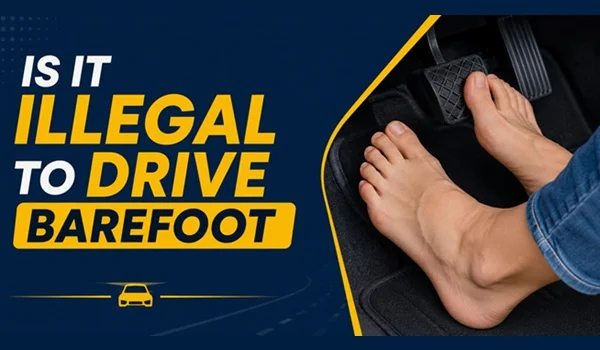
Many drivers have heard the warning at least once:
“Don’t drive barefoot — it’s illegal!”
Some people hear it from parents, driving instructors, or friends. Others believe police can ticket you immediately if they see you driving without shoes.
But is that actually true?
The short answer is: No, it is generally not illegal to drive barefoot in the United States. In fact, no state has a law that specifically bans barefoot driving for regular passenger vehicles.
However, that does not mean driving without shoes is always a good idea. In some situations, it can still lead to legal or safety problems if it contributes to reckless or unsafe driving.
This guide explains the real law in simple English so you can separate fact from myth.
Is Driving Barefoot Illegal in the U.S.?
No. In all 50 states, there is generally no law specifically making barefoot driving illegal for ordinary drivers.
You will not normally get a ticket simply because:
- you took off your shoes,
- drove home from the beach barefoot,
- or forgot your footwear.
This surprises many people because the myth has been around for decades.
Why Do So Many People Think It’s Illegal?
The myth likely became popular because:
- barefoot driving can seem unsafe,
- driving instructors discouraged it,
- and some people confused safety advice with actual law.
Over time, “not recommended” slowly turned into “illegal” in everyday conversation.
But legally speaking, there is a big difference between:
- something being unsafe, and
- something being against the law.
Can You Still Get in Trouble for Driving Barefoot?
Possibly — but usually not just for being barefoot.
If driving without shoes contributes to:
- careless driving,
- reckless driving,
- or an accident,
a police officer could potentially cite you under broader traffic safety laws.
For example:
- if your foot slips off the pedal,
- you lose control,
- or your driving becomes dangerous,
being barefoot may become part of the investigation.
The issue would not be “bare feet” itself. The issue would be unsafe driving behavior.
Is Barefoot Driving Dangerous?
Opinions differ.
Some drivers feel more control without shoes, especially compared to:
- flip-flops,
- high heels,
- or bulky boots.
Others believe barefoot driving increases risk because:
- feet may slip more easily,
- pedals may feel harder to control,
- and emergency braking could become less effective.
Interestingly, some safety experts argue that certain types of footwear may actually be more dangerous than bare feet.
Are Flip-Flops Worse Than Bare Feet?
In many cases, possibly yes.
Loose shoes like flip-flops can:
- slide under pedals,
- get stuck,
- or fall off while driving.
That can create a serious hazard during sudden braking.
Some drivers choose to drive barefoot specifically to avoid problems caused by unstable footwear.
What Types of Footwear Can Be Risky While Driving?
Here are some examples of footwear that may interfere with safe driving:
| Footwear Type | Possible Driving Risk |
| Flip-flops | Can slip off or get stuck |
| High heels | Reduced pedal control |
| Heavy work boots | Harder to feel pedals |
| Platform shoes | Slower reaction time |
| Bare feet | Possible slipping or discomfort |
The safest option is usually secure, comfortable shoes with good pedal control.
Can Police Pull You Over for Driving Barefoot?
Usually no — not solely for bare feet.
Police generally need another reason to stop you, such as:
- speeding,
- reckless driving,
- broken taillights,
- or traffic violations.
However, if an officer believes your barefoot driving is creating a dangerous situation, they could potentially investigate further.
What Happens if You Crash While Driving Barefoot?
This is where things can become more complicated.
If you are involved in an accident, investigators or insurance companies may look at whether:
- your driving was negligent,
- footwear played a role,
- or your actions contributed to the crash.
Driving barefoot alone does not automatically make you responsible for an accident. But if it clearly affected your control of the vehicle, it could become relevant evidence.
Does Barefoot Driving Affect Insurance Claims?
Usually not by itself.
Insurance companies focus mainly on:
- fault,
- negligence,
- and accident details.
Simply being barefoot does not automatically void insurance coverage.
However, if unsafe driving behavior contributed to the accident, insurers may consider all surrounding factors — including footwear.
Are Motorcycle Laws Different?
Yes, sometimes.
Some states may have:
- safety equipment rules,
- helmet laws,
- or motorcycle operation requirements
that indirectly involve footwear.
For example, motorcycle training programs often strongly recommend sturdy footwear for safety reasons.
Still, laws vary depending on the state and type of vehicle.
What About Commercial Drivers?
Commercial drivers may face stricter workplace or company rules.
For example:
- trucking companies,
- delivery services,
- or employers
may require proper footwear as part of safety policies.
That is usually a company or occupational safety issue rather than a general criminal law.
Is Driving Barefoot Safer Than Wearing Certain Shoes?
Many driving experts would say:
- secure sneakers are usually safest,
- flip-flops are often worse,
- and barefoot driving may be better than unstable footwear in some situations.
The key issue is pedal control.
If footwear interferes with your ability to brake or accelerate safely, it becomes a problem regardless of whether shoes are legally required.
Common Myths About Barefoot Driving
Myth 1: Driving barefoot is illegal everywhere
False. No U.S. state specifically bans barefoot driving for regular passenger cars.
Myth 2: Police can always ticket you for no shoes
False. Bare feet alone usually are not enough for a citation.
Myth 3: Insurance automatically denies claims
False. Insurance decisions depend on fault and negligence, not simply footwear.
Myth 4: Barefoot driving is always more dangerous
Not necessarily. Some loose footwear may actually create greater risks.
Practical Tips for Safe Driving
Whether you drive barefoot or with shoes, safety matters most.
Good habits include:
- keeping footwear secure,
- avoiding loose sandals while driving,
- maintaining good pedal control,
- and staying focused on the road.
If you remove uncomfortable shoes while driving, make sure they are stored safely away from the pedals.
A loose shoe sliding under the brake pedal can become dangerous very quickly.
Frequently Asked Questions
Q: Is it illegal to drive barefoot in California?
A: No. California does not specifically ban barefoot driving.
Q: Can you get a ticket for driving without shoes?
A: Usually no, unless your driving becomes unsafe or reckless.
Q: Is barefoot driving safer than flip-flops?
A: Many safety experts believe barefoot driving may provide better control than loose flip-flops.
Q: Can barefoot driving affect an accident case?
A: Potentially, if investigators believe it contributed to unsafe driving.
Q: Why do people think it’s illegal?
A: Mostly because of a long-running myth repeated for generations.
Final Thoughts
So, is it illegal to not wear shoes while driving?
In almost all everyday situations, no — driving barefoot is not illegal in the United States. The idea that it is automatically against the law is mostly a myth.
However, safety still matters. If driving barefoot causes you to lose control or drive recklessly, you could still face legal consequences related to unsafe driving.
For most drivers, the safest choice is secure, comfortable footwear that gives solid pedal control. But if your only options are unstable flip-flops or bare feet, many experts would argue barefoot may actually be the safer option.
The most important thing is not whether you are wearing shoes — it is whether you can drive safely and responsibly.