
If you’ve heard rumors that collecting rainwater is illegal in America, you may be wondering whether that applies in Texas too.
The good news is that Texas is actually one of the most rainwater-harvesting-friendly states in the country.
In fact, not only is collecting rainwater legal in Texas, but the state actively encourages it through laws, tax incentives, educational programs, and water conservation initiatives.
Still, there are important rules homeowners should understand — especially if they plan to use collected rainwater for drinking, large-scale storage, or commercial purposes.
In this guide, we’ll explain:
- Whether collecting rainwater is legal in Texas,
- Texas rainwater harvesting laws,
- Potential restrictions,
- How homeowners can legally use rainwater,
- And practical tips for setting up a safe system.
Is It Illegal to Collect Rainwater in Texas?
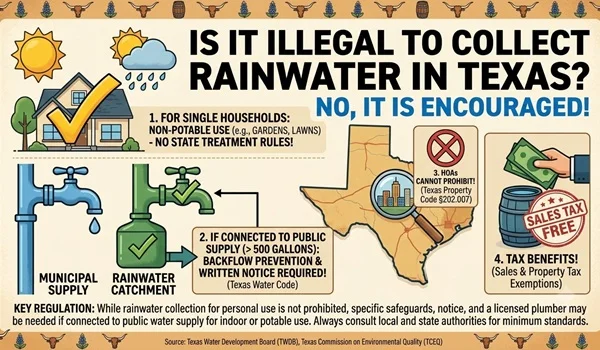
No. Collecting rainwater in Texas is completely legal.
Texas actually supports rainwater harvesting because the state frequently deals with:
- Drought conditions,
- Water shortages,
- High water demand,
- And long-term conservation concerns.
Many homeowners in Texas use rain barrels and larger storage systems for:
- Gardening,
- Irrigation,
- Livestock,
- Landscaping,
- And even household water supplies in some rural areas.
The state views rainwater harvesting as a smart conservation practice rather than a legal problem.
Why Texas Encourages Rainwater Harvesting
Texas has a unique climate.
Some regions experience:
- Long dry periods,
- Extreme summer heat,
- Water restrictions,
- And pressure on municipal water systems.
Rainwater harvesting helps reduce stress on public water supplies while giving homeowners additional water sources.
Benefits include:
- Lower water bills,
- Reduced demand on city infrastructure,
- Better drought preparedness,
- And environmentally friendly water use.
That’s why Texas lawmakers and water agencies generally promote rainwater collection instead of restricting it.
What Texas Law Says About Rainwater Harvesting
Texas law specifically recognizes rainwater harvesting as legal.
The state has passed several laws encouraging property owners to install collection systems.
In many areas:
- Builders are encouraged to include rainwater systems,
- Government agencies provide educational resources,
- And homeowners may qualify for tax-related incentives.
Texas even allows rainwater systems to be integrated into some residential plumbing systems under certain rules.
Can You Drink Collected Rainwater in Texas?
Possibly — but there are important safety requirements.
Rainwater may contain:
- Dirt,
- Bacteria,
- Roof debris,
- Bird droppings,
- Or airborne contaminants.
If you plan to use rainwater for drinking or indoor household use, proper treatment is essential.
This usually includes:
- Filtration systems,
- Disinfection,
- Safe storage tanks,
- And plumbing compliance.
For non-drinking purposes like:
- Watering plants,
- Lawn care,
- Or outdoor cleaning,
the rules are much simpler.
Common Uses for Rainwater in Texas
Texans commonly use collected rainwater for:
- Irrigation,
- Gardens,
- Farms,
- Ranches,
- Greenhouses,
- Livestock watering,
- And emergency water storage.
Some rural properties even rely heavily on rainwater systems because municipal water access may be limited.
Do You Need a Permit to Collect Rainwater?
For basic residential rain barrels, permits are usually not required.
However, permits or inspections may be needed for:
- Large underground tanks,
- Complex plumbing systems,
- Commercial systems,
- Or systems connected to household drinking water.
Requirements can vary by:
- City,
- County,
- Or local building code.
That’s why homeowners should always check local regulations before installing major systems.
Texas Rainwater Harvesting Rules at a Glance
| Situation | Likely Legal Status |
| Small rain barrel for gardening | Legal |
| Large residential storage system | Usually legal |
| Drinking water use | Allowed with proper treatment |
| Commercial harvesting system | May require permits |
| Unsafe or contaminated system | Could violate health codes |
Are There Tax Incentives in Texas?
Yes, in some cases.
Texas has supported rainwater harvesting through:
- Property tax exemptions for certain systems,
- Water conservation programs,
- And local rebate initiatives.
Some cities and water districts may offer:
- Rebates for rain barrels,
- Discounts on conservation equipment,
- Or educational assistance.
Availability varies by location.
Can Homeowners Associations (HOAs) Restrict Rain Barrels?
This is a common concern.
In Texas, homeowners associations generally cannot completely ban rain barrels, although they may regulate:
- Placement,
- Appearance,
- Size,
- Or visibility from the street.
Texas law provides certain protections for homeowners who want to install rainwater harvesting systems.
Still, HOA rules can create practical limitations, so checking neighborhood guidelines is important.
Is Rainwater Harvesting Safe?
It can be — if the system is properly maintained.
Here are a few safety tips.
Keep Gutters Clean
Leaves and debris can contaminate stored water.
Use Covered Tanks
This helps prevent:
- Mosquitoes,
- Algae growth,
- And contamination.
Avoid Drinking Untreated Water
Always filter and disinfect rainwater intended for human consumption.
Inspect Storage Systems Regularly
Leaks and damaged tanks can create safety issues.
Why the “Rainwater Is Illegal” Myth Exists
Many people confuse Texas law with stricter rules from western states like:
- Colorado
- Utah
Historically, some western states limited rainwater collection because of complex water-rights systems.
But Texas has taken a very different approach.
Instead of restricting homeowners, Texas largely encourages responsible rainwater harvesting.
Can You Get Fined for Collecting Rainwater in Texas?
For ordinary residential rainwater collection, fines are extremely unlikely.
Problems usually arise only if:
- A system violates local building codes,
- Unsafe plumbing contaminates drinking water,
- Or health regulations are ignored.
Simple backyard rain barrels are widely accepted throughout the state.
Environmental Benefits of Rainwater Harvesting
Rainwater collection offers several environmental advantages.
Conserves Municipal Water
Less demand is placed on city systems.
Reduces Stormwater Runoff
This helps lower flooding and erosion risks.
Supports Drought Preparedness
Stored water becomes valuable during dry periods.
Encourages Sustainable Living
Homeowners reduce overall water waste.
In drought-prone states like Texas, these benefits are especially important.
Best Rainwater Collection Practices for Texas Homeowners
If you want to start collecting rainwater legally and safely, follow these practical steps:
Start Small
A basic rain barrel is easy to install and maintain.
Choose Food-Grade Containers
This is especially important if the water may later be filtered for household use.
Install Overflow Protection
Heavy Texas storms can quickly overfill small systems.
Keep Systems Shaded
This helps reduce algae growth in hot weather.
Learn Local Rules
Some cities may have plumbing or installation requirements.
Rural vs. Urban Rainwater Collection
Rainwater harvesting often looks different depending on where you live.
Rural Areas
Large tanks and whole-home systems are more common.
Urban Areas
Smaller decorative rain barrels and irrigation systems are typical.
Both are generally legal in Texas when installed responsibly.
Final Thoughts
So, is it illegal to collect rainwater in Texas?
No — quite the opposite.
Texas is one of the most rainwater-harvesting-friendly states in America. Homeowners are generally free to collect and use rainwater for gardening, irrigation, and many other purposes. In some cases, the state even offers incentives to encourage water conservation.
However, larger systems and drinking-water setups may still need to follow local building, plumbing, and health regulations.
For most Texans, though, collecting rainwater is:
- Legal,
- Practical,
- Environmentally friendly,
- And a smart way to conserve water in a drought-prone state.