New Mexico Attorney General Raúl Torrez has filed a federal civil lawsuit against Jeffrey Epstein’s longtime attorney, Darren K. Indyke, and accountant, Richard D. Kahn, accusing them of helping finance and conceal the convicted sex offender’s trafficking operation. The lawsuit, filed on October 21, 2026, seeks to prevent the two men from receiving up to $75 million in potential payments from Epstein’s estate and to recover money for survivors.
The case focuses on allegations that financial accounts, business entities, payments and professional services helped sustain Epstein’s activities, including alleged sexual abuse at Zorro Ranch, his former property in Santa Fe County, New Mexico.
The defendants strongly deny knowingly facilitating Epstein’s sexual abuse or trafficking. Their attorney has argued that the state filed the lawsuit without first interviewing them.
The case represents a significant new legal effort to investigate the people and financial arrangements surrounding Epstein. It also comes as New Mexico reexamines why allegations concerning his New Mexico property received limited law-enforcement attention during earlier investigations.
What Happened? Key Facts About the Lawsuit
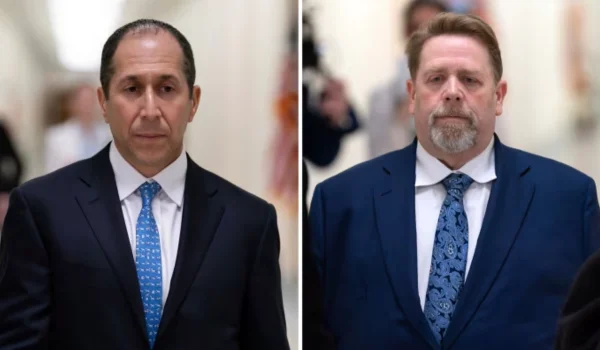
The lawsuit was filed in the U.S. District Court for the District of New Mexico on October 21, 2026. It names Indyke, Kahn, Epstein’s estate and the 1953 Trust, which holds estate assets.
According to the complaint, the state believes Indyke and Kahn played roles beyond providing ordinary legal and accounting services. Prosecutors allege that they managed financial accounts, handled payments connected to women Epstein abused, and used corporate arrangements that helped conceal aspects of his activities.
The state is bringing claims under the federal Trafficking Victims Protection Act and the New Mexico Racketeering Act.
The main objectives include:
- Preventing Indyke and Kahn from receiving their potential inheritances while the case proceeds.
- Recovering financial benefits allegedly connected to the trafficking operation.
- Seeking compensatory and punitive damages and restitution for survivors.
- Establishing accountability for people the state alleges helped sustain Epstein’s activities.
The lawsuit does not establish that the allegations are true. The defendants will have the opportunity to contest the claims in court.
Why Are Indyke and Kahn Being Sued?
Darren K. Indyke was Epstein’s longtime attorney, while Richard D. Kahn handled accounting and financial matters associated with Epstein and his businesses. Both men later became co-executors of Epstein’s estate.
New Mexico alleges that their professional roles gave them substantial involvement in the financial arrangements surrounding Epstein’s activities.
Allegations involving financial accounts
The complaint alleges that, by 2005, Indyke and Kahn managed or controlled at least 140 bank accounts associated with Epstein and related businesses.
The state also alleges that Epstein or people acting on his behalf withdrew more than $6 million in cash from bank accounts between 2002 and 2013. According to the complaint, some withdrawals were structured to avoid federal reporting requirements.
The filing further alleges that Indyke received more than $16 million from Epstein and related entities between 2011 and 2019, while Kahn received more than $10 million during the same period.
These figures are allegations and financial information cited in the complaint; they do not independently establish that every transaction was illegal or connected to trafficking.
Alleged payments associated with survivors
The state also points to payments for medical expenses, housing, tuition and other costs involving women who were allegedly abused or recruited by Epstein.
The complaint cites a 2017 email from Kahn to Epstein concerning payment of medical expenses for girls. Prosecutors argue that these financial arrangements formed part of a broader system that helped sustain Epstein’s activities.
The defendants reject the state’s interpretation of their work. Their attorney has stated that neither man knowingly facilitated Epstein’s abuse and that no woman has accused either of committing sexual abuse or witnessing it.
The central legal question is whether the evidence establishes knowing participation in, or assistance to, unlawful activities rather than legitimate professional services.
The $75 Million Question: Who Could Receive Money From Epstein’s Estate?
One of the most consequential aspects of the lawsuit concerns the potential inheritance of Indyke and Kahn.
Epstein amended his will shortly before his death in August 2019. Under its provisions, Indyke was designated to receive $50 million and Kahn $25 million, subject to the availability of estate funds and the applicable probate process.
Together, the potential bequests total $75 million.
The estate was initially valued at approximately $577.7 million after Epstein’s death, according to probate records cited in the New Mexico complaint. By June 30, 2026, its value had fallen to slightly more than $107 million.
The reduction reflects payments and expenses associated with the estate, including compensation for survivors and legal costs.
New Mexico is asking the federal court to prevent the two men from receiving the potential inheritances while the lawsuit is pending.
The state argues that it would be inappropriate for people alleged to have helped sustain Epstein’s operation to benefit financially from the estate before the court determines their legal responsibility.
However, the $75 million is not money that the men have necessarily received. It represents potential bequests, and the estate’s available assets and the outcome of the litigation could affect any eventual distributions.
What Is Zorro Ranch, and Why Is It Important?
Zorro Ranch was a large property near Stanley in Santa Fe County, approximately 30 miles south of Santa Fe. Epstein purchased it in 1993 and owned it until his death in 2019.
The property covered approximately 7,600 acres and included a large residence, guest houses, a private airstrip and a helicopter landing area.
Survivors have alleged that Epstein and his associates sexually abused girls and young women at the ranch. Some accounts describe victims being transported to the property by private aircraft and offered assistance with education, careers or financial needs before being subjected to abuse.
The new complaint cites survivor accounts, FBI interviews and earlier court testimony to support the state’s allegations about activities at the ranch.
These accounts are significant because they connect the property to the broader allegations of trafficking and abuse surrounding Epstein.
The lawsuit also alleges that the companies responsible for owning and operating the ranch were part of Epstein’s financial structure. Indyke and Kahn allegedly held positions in some of those entities, and the state argues that their roles helped facilitate the operation.
Nevertheless, the precise responsibilities of each defendant and the extent of their knowledge remain disputed legal questions.
The Earlier Investigations: Why Is New Mexico Revisiting the Case?
Epstein’s criminal investigations began years before the current lawsuit, but the handling of allegations involving Zorro Ranch has become a particular focus of renewed scrutiny.
2005–2008: Florida investigation and legal proceedings
Authorities in Florida investigated allegations involving Epstein in the mid-2000s. In 2008, he pleaded guilty in Florida state court to prostitution-related offenses, including procuring a person under 18 for prostitution, and received a sentence that became the subject of extensive public criticism.
The outcome of that case did not resolve all allegations involving Epstein or his other properties.
2019: Federal charges and Epstein’s death
Federal authorities arrested Epstein in July 2019 on sex trafficking charges in New York. He died in federal custody in August 2019 while awaiting trial.
His death meant that the federal criminal case against him did not proceed to a verdict.
His associate Ghislaine Maxwell was later convicted in federal court in 2021 of offenses related to recruiting and trafficking minors for Epstein’s sexual abuse. She received a 20-year prison sentence.
2019: New Mexico’s investigation was halted
New Mexico’s attorney general’s office had also begun examining Epstein-related allegations. Former Attorney General Hector Balderas said that federal prosecutors asked the state to stop its parallel investigation to avoid duplicating the federal proceedings.
According to reporting by the Associated Press, the ranch was not searched by federal authorities during the earlier investigations of Epstein and Maxwell.
That history has contributed to questions about whether alleged crimes connected to the New Mexico property were adequately investigated.
2026: Renewed state scrutiny
New Mexico reopened its criminal investigation earlier in 2026 and searched the ranch property in March.
State lawmakers also established a bipartisan investigation into allegations of criminal activity and possible failures by public authorities. The inquiry reflects concern that allegations involving the property were not fully investigated or prosecuted.
In August 2026, New Mexico also sued the U.S. Department of Justice over access to information needed for its investigation. The federal government cited concerns about releasing information that could identify victims.
The October lawsuit against Indyke and Kahn is a separate civil proceeding. It seeks financial accountability and restrictions on estate payments, while the reopened criminal investigation continues.
What Do Epstein Survivors Want From the Lawsuit?
Several survivors have publicly supported New Mexico’s action.
Their position is that Epstein’s operation depended on more than one individual. They argue that financial, administrative and professional support helped him continue his activities and that the people responsible should face scrutiny.
At the announcement of the lawsuit, survivors Julia Molchanova and Anouska De Georgiou stood with Attorney General Torrez.
Their statements emphasized the need for accountability, answers about the people who allegedly helped Epstein, and greater transparency concerning his financial arrangements.
The case also raises concerns about conflicts of interest in estate administration. Indyke and Kahn serve as co-executors while potentially standing to receive substantial inheritances from the same estate.
The state is asking the court to intervene before the proposed payments are made. Whether that relief is granted will depend on the legal proceedings.
The Earlier $35 Million Settlement
The October lawsuit follows a separate settlement involving Epstein’s estate and survivors.
Earlier in 2026, Indyke and Kahn, acting as estate co-executors, agreed to a settlement of up to $35 million in a class-action lawsuit brought by Epstein accusers. The agreement did not include an admission of wrongdoing by the men.
The New Mexico case differs because the state itself is pursuing claims under state and federal law. It seeks additional financial recovery and restrictions on the potential inheritance payments.
The two proceedings therefore have different legal purposes. The settlement addresses claims brought by survivors, while the state’s lawsuit seeks to establish liability and recover funds through a government enforcement action.
Any recovery must be considered in light of the estate’s remaining assets, existing obligations and the outcome of the relevant court proceedings.
What Do the Defendants Say?
Indyke and Kahn have strongly rejected the allegations.
Their attorney, Dan Weiner, said the men deny knowingly facilitating Epstein’s sexual abuse or trafficking. He also argued that the New Mexico attorney general’s office did not seek to interview them before filing the lawsuit.
The defense maintains that the men provided legal and accounting services and that no woman has accused them of personally committing sexual abuse or witnessing it.
These denials are an important part of the story. The complaint contains serious allegations, but the defendants have not been found liable in this case.
The civil proceedings will need to examine the evidence, including financial records, corporate documents, communications and witness testimony, before the court can determine whether the state has proved its claims.
What Happens Next?
The case will proceed through the federal court system. The defendants can challenge the allegations, contest the evidence and seek dismissal of claims where legally justified.
The court may also consider the state’s request to restrict the potential estate payments while the litigation continues.
Meanwhile, New Mexico’s criminal investigation into alleged offenses connected to Zorro Ranch remains ongoing. The civil case and the criminal investigation are distinct processes, and developments in one do not automatically establish the outcome of the other.
The principal issues to watch are:
- Whether the court restricts payments to Indyke and Kahn.
- Whether the state can establish that their financial and professional activities knowingly facilitated unlawful conduct.
- Whether additional financial records or testimony clarify the roles of Epstein’s associates.
- Whether the reopened investigation produces further findings about alleged crimes at Zorro Ranch.
- Whether the estate retains sufficient assets to satisfy existing obligations and any future judgments.
Conclusion
New Mexico’s lawsuit against Darren Indyke and Richard Kahn represents a significant effort to examine the financial network surrounding Jeffrey Epstein and determine whether people who managed his affairs helped sustain or conceal his trafficking operation.
The state seeks to block as much as $75 million in potential estate payments and recover money for survivors. Its complaint alleges that the defendants managed financial accounts, handled payments and participated in corporate arrangements connected to Epstein’s activities.
The defendants deny knowingly assisting his abuse and argue that the state filed the case without first seeking their cooperation. Their legal responsibility remains to be determined.
The history of Zorro Ranch adds further significance. Although survivors have described alleged abuse at the property, the earlier investigations did not result in criminal charges against Epstein in New Mexico. The renewed investigation and the civil lawsuit now provide separate avenues for examining what happened and whether additional accountability is warranted.
Ultimately, the case is about more than a potential $75 million inheritance. It is about whether the law can establish responsibility for the financial and administrative support surrounding a trafficking operation—and whether survivors can obtain further answers and compensation after Epstein’s death.
Editorial note: The lawsuit’s allegations are attributed to the state and have not been established as findings of liability. The defendants’ denials and the ongoing status of the investigations are included to distinguish allegations from proven facts.