
More than 5.6 million Americans are living with limb loss or limb difference, according to a 2024 prevalence study commissioned by the Amputee Coalition. Roughly 2.3 million of that group are living with limb loss. Disease accounts for the largest share, but others trace back to someone else’s negligence, a defective piece of equipment, a driver who ran a red light, or a property owner who left a hazard unaddressed for months.
According to the legal firm website https://www.gervelislaw.com/, amputation is an example of catastrophic injury. These injuries can lead to permanent disabilities and disfigurement.
Here’s how amputation injuries get compensated in injury claims.
Why Amputation Cases Get Valued Differently
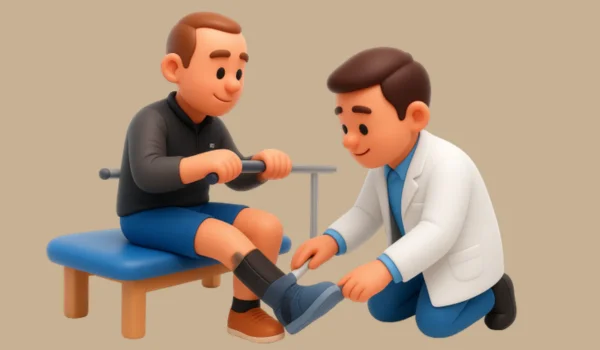
Loss of a limb comes with permanent limitations to bodily function and can have significant effects on mental health. For some, complete adjustment to limb loss can take many years. These and many other factors are considered when arriving at a dollar amount of compensation.
Prosthetics eventually wear out. People who stay very active, and children who are still growing, often need new ones ahead of schedule. Rehabilitation often continues beyond the first year after the prosthesis is fitted, which adds to the total. Home remodeling for ramps and bathroom improvements is another cost to include.
The loss of the ability to earn amplifies many amputation claims. To prove that the injury limits the work you can do, medical records are used as proof. In addition, testimonies from the injured person and from the vocational specialist also add to the weight of the claim. Earnings before the accident, training, education, and the job market all shape the estimate.
Another thing to consider is the pain and suffering that the victim has to endure. Most states set no cap on it in ordinary negligence cases, so settlements and verdicts can run high, especially when the injury changes a person’s life for good.
Where Liability Actually Comes From
An amputation itself isn’t a cause of action. Something has to have caused it, and that something determines which area of law governs the claim.
Among traumatic amputations, motor vehicle collisions are one common cause, and motorcycle and pedestrian crashes more often cost people a lower limb. Machinery injuries at work can bring a workers’ compensation claim, a claim against the equipment maker, or both. Product liability includes issues such as an unguarded power tool, a failing medical device, or an ineffective car safety system.
In many states, an injured person can win a product claim by proving the item was defective, without having to show the maker was careless. Premises liability applies when an owner lets a hazard go unfixed or unmarked. Examples are exposed heavy equipment or a construction site with no warnings.
Early on, deciding the appropriate category is critical. This establishes the potential defendants, the nature of the required evidence, and the relevant deadlines for the case. Sorting the claim into one of these categories early is standard for attorneys who take these cases, including amputation injury lawyer Brian W. Easton.
The Deadline Problem Nobody Thinks About Early
Filing deadlines differ by state. Two or three years is common, a few states allow up to six, and a few set shorter limits. In Nevada, most injury suits must be filed within two years of the injury under NRS 11.190. A late filing can end the claim.
Amputation cases often take longer to understand fully, so the filing deadline deserves attention early. Medical treatment can stretch across most of the filing period. Prosthetic fitting alone can take months. It’s easy for the legal deadline to slip into the background while the medical picture is still unfolding, right up until it’s nearly too late to file.
Comparative Fault Complicates the Math
Nevada adopts a comparative negligence standard. With this standard, even an injured person who contributed to their own injury is eligible to recover a portion of the total damages. Under NRS 41.141, the plaintiff cannot recover damages once their share of negligence is deemed greater than that of all defendants combined, which usually means a fault share above 50%. Other states set their own rules, so Nevada’s cutoff should not be assumed elsewhere.
When a defense attorney looks to place a portion of fault on the plaintiff in an amputation claim, the attorney will attempt to highlight things like safety steps skipped, protective gear omitted, or ignoring warnings. The larger the percentage of fault assigned to the plaintiff, the smaller the award of damages.
What This Actually Means for Someone Facing This
A full picture of an amputation claim takes months of records and treatment to build. Lawyers usually work on proving fault and proving damages at the same time, even when blame is disputed or several defendants are named.
Accepting an early offer can leave future bills unpaid. In addition, the filing deadline and the argument over fault tend to show up while the injured person is still learning to live with the loss.