
If you’ve ever visited Florida’s beautiful springs or coastlines, you may have seen a slow-moving, gentle sea creature floating near the surface. That’s a manatee, often called a “sea cow.” Many people wonder:
Is it illegal to touch a manatee?
The short answer is: Yes — in most situations, it is illegal to touch, feed, chase, or harass a manatee in the United States.
Let’s break this down in simple, clear language so you understand what the law says, why it exists, and what could happen if you ignore it.
🐋 What Is a Manatee?
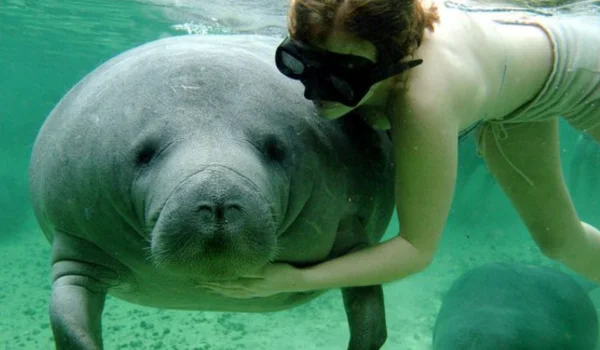
In the United States, the species most people see is the West Indian manatee. They are commonly found in Florida’s rivers, springs, and coastal waters.
Manatees are:
- Slow-moving
- Gentle and curious
- Large (up to 13 feet long and 1,000+ pounds)
- Vulnerable to boat strikes and habitat loss
Because they are so calm and slow, they are easily injured by boats and human interference.
📜 What Law Protects Manatees?
Manatees are protected under two major federal laws:
1️⃣ The Endangered Species Act
This law protects animals that are threatened or endangered. Even though the manatee was reclassified from “endangered” to “threatened” in 2017, it is still fully protected.
2️⃣ The Marine Mammal Protection Act
This law makes it illegal to “harass, hunt, capture, or kill” marine mammals — including manatees.
Under these laws, harassment includes any action that disturbs or alters the animal’s natural behavior.
That includes:
- Touching
- Riding
- Chasing
- Feeding
- Surrounding
- Blocking their movement
- Splashing at them to get attention
🚨 So Is It Always Illegal to Touch a Manatee?
In almost all real-life situations, yes.
Even if:
- The manatee approaches you
- It swims near your kayak
- It brushes against you
You are not allowed to actively reach out and touch it.
You must:
- Keep your hands to yourself
- Avoid initiating contact
- Move slowly and calmly away
Accidental contact may not result in penalties, but intentional touching can lead to fines or charges.
💰 What Are the Penalties?
Violating manatee protection laws can result in:
- Fines up to $50,000
- Up to one year in federal jail
- Civil penalties
- State-level fines in Florida
Enforcement agencies take this seriously — especially in Florida, where manatees are most common.
🌴 Florida Has Additional Rules
Florida law also protects manatees at the state level. The Florida Fish and Wildlife Conservation Commission (FWC) actively patrols manatee areas.
In places like:
- Crystal River
- Blue Spring State Park
- Homosassa Springs
There are strict “no touch” and “passive observation only” rules.
Swimmers and snorkelers are often required to:
- Float calmly
- Keep hands tucked
- Avoid diving toward manatees
Tour operators must also follow strict guidelines.
🤔 Why Is Touching a Manatee Illegal?
You might wonder:
“They’re friendly. Why can’t I just pet one?”
Here’s why:
1️⃣ Stress to the Animal
Even gentle contact can disrupt feeding, resting, or nursing behavior.
2️⃣ Human Habituation
If manatees get too comfortable with humans, they may:
- Approach boats more often
- Swim into dangerous areas
- Become more likely to be injured
3️⃣ Disease Transmission
Humans can pass bacteria or illness to marine mammals.
4️⃣ Public Safety
Although rare, large animals can cause accidental injuries.
The goal of the law is simple:
Protect the animal from harm — even unintentional harm.
🛶 What If a Manatee Touches You?
This happens often in Florida springs.
If a manatee approaches you:
✅ Stay still
✅ Do not reach out
✅ Do not chase it
✅ Do not follow it
Passive contact — where the animal initiates and you do nothing — is generally not prosecuted.
The key word is: passive observation.
📸 Can You Take Pictures?
Yes!
You can:
- Photograph
- Film
- Observe from a safe distance
Just avoid:
- Flash photography in sensitive areas
- Crowding the animal
- Diving down to chase it for a better shot
⚖️ What Counts as “Harassment”?
Under federal law, harassment includes actions that:
- Injure a marine mammal
- Disturb behavior like feeding, breeding, nursing, or resting
Examples of illegal behavior:
- Riding a manatee like a float
- Pulling on its fins
- Trying to “hug” it
- Blocking its path
- Feeding it lettuce or other food
Even if you think you’re being gentle, the law does not allow intentional contact.
🧭 What About Tour Groups?
Licensed tour operators in Florida must follow strict wildlife rules.
Good tour guides will:
- Brief you on no-touch policies
- Monitor swimmer behavior
- Remove guests who break rules
If a tour encourages touching manatees, that’s a red flag.
🧑⚖️ What Should Law Practices Know?
For legal professionals, manatee protection cases usually involve:
- Federal wildlife violations
- Civil penalties
- State wildlife enforcement
- Misdemeanor-level charges
Most cases are handled administratively unless the violation is severe or repeated.
Defenses may involve:
- Lack of intent
- Accidental contact
- Misidentification of the species
- Insufficient evidence of harassment
However, wildlife enforcement officers often document incidents carefully, especially in protected zones.
🌎 Are Manatees Still Endangered?
The West Indian manatee is currently classified as “threatened” under federal law — but that does not reduce protections.
Population numbers have improved over the years, but they still face threats such as:
- Boat strikes
- Red tide
- Loss of seagrass habitat
- Water pollution
That’s why strict laws remain in place.
📝 Quick Summary
Is it illegal to touch a manatee?
✔️ Yes — in almost all intentional situations.
Why?
To protect the animal from stress, injury, and harmful human interaction.
What happens if you do?
You could face heavy fines and possible jail time.
What should you do instead?
Observe quietly. Let them be wild.
🐾 Final Thoughts
Manatees are gentle, beautiful creatures that attract millions of visitors every year. But the best way to show love and respect for wildlife is by not touching it.
The law isn’t meant to ruin your vacation — it’s meant to protect a species that has struggled to survive.
So next time you’re in Florida waters and a manatee glides past you, remember:
Look, don’t touch.
Enjoy, don’t interfere.
Protect, don’t disturb.
That’s not just good manners — it’s the law.