This is a complete guide to rideshare accident claims in Houston.
In this guide, you’ll learn:
- The 3 “app periods” that decide which insurance pays
- How a single Uber ride connects to 4 different insurance policies
- The exact steps to take in the first 72 hours
- Lots more
Let’s dive right in.
Why Rideshare Crashes Are Different
Here’s the deal:
A normal car crash has one big question. Who caused it?
A rideshare crash has two:
- Who caused it?
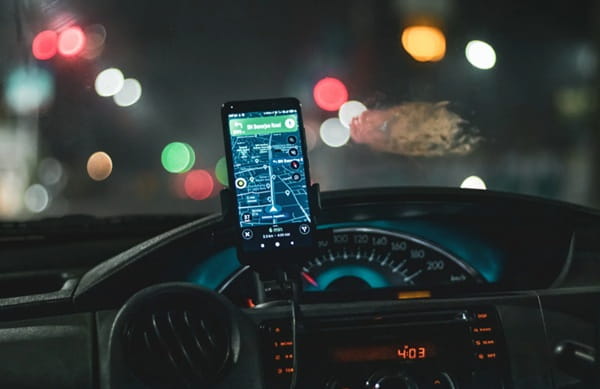
- What did the driver’s app show at the exact moment of the crash?
That second question changes everything.
Why?
Because Texas law sets different insurance amounts for different app periods. Same driver. Same car. Same road. Very different coverage.
And Houston is the place to get this right. TxDOT counted 60,317 crashes inside Houston city limits in 2025. That’s more than any other city in Texas.
Statewide, 244,534 people were injured in crashes that year. Rideshare passengers in Houston ride in the state’s busiest crash zone.
The 3 App Periods (and Why They Matter)
Chapter 1954 of the Texas Insurance Code breaks every rideshare trip into periods.
Here’s a quick breakdown:
Period 1: App On, No Ride Accepted
The driver is logged in and waiting for a request.
Minimum coverage:
- $50,000 per injured person
- $100,000 for all injuries in one crash
- $25,000 for property damage
Period 2: Ride Accepted, Heading to Pickup
The driver accepted your request and is on the way.
Minimum coverage: $1,000,000.
Period 3: Passenger in the Car
You’re in the back seat. The trip is underway.
Minimum coverage: still $1,000,000, until the ride ends.
Key Takeaway: The jump from Period 1 to Period 2 is huge. Coverage per person goes from $50,000 to $1,000,000. That’s 20x more, triggered by one tap on a phone screen.
Example
Let’s make this concrete.
(Quick note: the people in this example are made up. The rules are real Texas law.)
Maria finishes dinner on Washington Avenue. She books an Uber home to the Galleria.
Her driver, Luis, accepts the ride. (Period 2 starts.)
He picks her up. (Period 3 starts.)
Then, on Loop 610 near the Westheimer exit, a pickup truck cuts across the lane and slams into Maria’s door.
Result:
- A broken wrist
- A mild concussion
- $18,000 in medical bills in the first two weeks
The pickup driver caused the crash. But he carries only the Texas minimum under Transportation Code Section 601.072: $30,000 per injured person.
So is Maria stuck with whatever’s left over?
Nope.
Let’s walk through exactly what she did, step by step.
Lock Down the Evidence at the Scene
This is the most important step.
Why? Evidence disappears fast. Cars get towed. Witnesses leave. Memories fade.
Here’s what Maria did before leaving the scene:
- Called 911 and got a police report number
- Took photos of both cars, the lanes, and the exit sign
- Screenshotted the trip in her Uber app (driver name, car, trip time)
- Got the pickup driver’s name, plate, and insurance card
Pro Tip: Take the app screenshot before you close the app. That one image proves the trip was active, which locks in the $1,000,000 coverage period.
Get Medical Care the Same Day
Maria told the officer, “I’m fine, really.”
Big mistake.
Adrenaline hides pain for hours after a crash. An hour later, her wrist was swelling.
A friend convinced her to go to the ER that night. The doctor found a fracture and a concussion.
Here’s why that ER visit matters so much:
It ties the injury to the crash in a medical record created the same night. Without it, the insurer argues the wrist got hurt some other way.
Key Takeaway: See a doctor the same day. Even if you feel fine.
Step #3: Find Every Insurance Policy
This is where most people leave money on the table.
Maria didn’t have one insurance policy to pursue. She had four:
- Policy #1: The pickup driver’s auto policy ($30,000 per person)
- Policy #2: Uber’s rideshare policy (active because the trip was underway)
- Policy #3: Maria’s own auto policy, including personal injury protection
- Policy #4: Maria’s health insurance, covering treatment while the claim stays open
The rideshare policy is the big one. When the at-fault driver doesn’t carry enough insurance, the rideshare company’s uninsured and underinsured motorist coverage is the place to look next.
Sorting out which policy pays first is the hardest part of any rideshare claim. Ben Dominguez, a Houston Uber and Lyft accident lawyer who has served Greater Houston since 1994, puts it the same way on his firm’s site: coverage depends on whether the driver was logged into the app, so the first job is finding every available policy.
Bottom line: miss one policy, and you miss real money.
Request the Trip Data Early
Your screenshot helps. But the rideshare company’s own records settle the question.
Those records show:
- When the driver logged in
- When the driver accepted the ride
- When the passenger got in
- The route, speed, and time of the crash
Here’s the catch:
Rideshare companies don’t keep every detail forever. So request this data early.
Say No to the Recorded Statement
On Day 3, an adjuster called Maria.
He was friendly. He asked for a recorded statement “to speed things up.”
Maria said no. She asked him to send his questions in writing.
Smart move.
A recorded statement given while you’re in pain (and on medication) helps exactly one side. Hint: it isn’t yours.
Win the Fault Fight With Evidence
In Month 2, the pickup driver’s insurer sent a letter. It claimed Luis was speeding and shared the blame.
Here’s why that matters:
Texas uses proportionate responsibility under Civil Practice and Remedies Code Section 33.001. A jury assigns each driver a percentage of fault.
As a passenger, Maria carries zero fault. But the insurers fight over how to split the bill.
The winner? Evidence.
The lane-change photos, the side-impact damage, and a witness who saw the pickup cut across lanes all pointed one way.
Don’t Settle Before Treatment Ends
Maria finished physical therapy in Month 4.
Only then did her claim have a clear value.
Think about it:
Settle in Week 2, and you’re guessing at your final medical bills. Settle after treatment ends, and you’re working with real numbers.
Just don’t forget the clock. Civil Practice and Remedies Code Section 16.003 gives you two years from the crash to file a lawsuit. Insurance talks don’t pause that deadline. Neither does treatment.
What If the Facts Were Different?
Small changes. Big differences.
Here’s how coverage shifts:
- App off: Only the driver’s personal policy applies. Many personal policies exclude rideshare driving, which creates gaps.
- App on, no ride accepted: The $50,000-per-person minimum applies.
- Ride accepted and the driver hits a pedestrian: The $1,000,000 coverage still applies, because the trip was active.
- No doctor visit that night: The insurer argues the injury came from somewhere else.
Your Houston Rideshare Crash Checklist
Leaving Bush Intercontinental? Hobby? A Midtown bar? A game at NRG Park?
Save this list:
- Call 911 and get the report number
- Screenshot the trip before closing the app
- Photograph the cars, road, and signs
- Get names, plates, and insurance from every driver
- Report the crash inside the Uber or Lyft app
- See a doctor the same day
- Skip recorded statements until you get advice
- Keep every bill and record in one folder
Now It’s Your Turn
Now I want to hear from you.
Which part of a rideshare claim surprised you most?
Maybe it’s the jump from $50,000 to $1,000,000 coverage with one tap of the app.
Or maybe it’s that one crash connects to four different insurance policies.
Either way, the lesson is the same: in Houston, the busiest crash city in Texas, the passengers who protect their evidence early are the ones who get paid in full.