
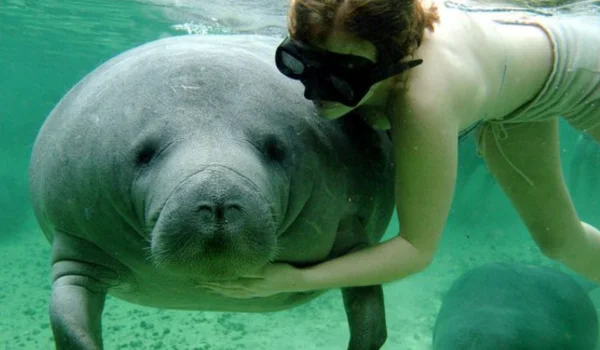
If you’ve ever visited Florida, you’ve probably seen signs that say:
“Do Not Touch the Manatees.”
That might leave you wondering:
👉 Why is it illegal to touch a manatee?
They look slow, gentle, and harmless.
The answer is about protection, survival, and federal law.
Let’s break it down in simple, everyday language.
First, What Is a Manatee?
Manatees are large, slow-moving marine mammals often called “sea cows.” One of the most well-known species in the U.S. is the West Indian manatee.
They:
- Live in warm coastal waters
- Often gather near springs in winter
- Move slowly
- Are calm and curious
Because they are friendly and not aggressive, people often feel tempted to touch them.
But that’s exactly why the law steps in.
The Short Answer: It’s About Protection
Touching a manatee is illegal because manatees are a protected species under federal and state law.
They are protected under:
- The Marine Mammal Protection Act (MMPA)
- The Endangered Species Act (ESA)
- Florida state wildlife laws
These laws make it illegal to:
- Harass
- Harm
- Feed
- Chase
- Or touch manatees
Even if your intention is harmless.
What Counts as “Harassment”?
Many people think harassment means hurting or attacking.
Under federal wildlife law, harassment includes:
- Touching
- Petting
- Holding
- Riding
- Blocking their movement
- Surrounding them in water
Even approaching them too closely can be considered harassment if it disrupts their natural behavior.
So yes — even a gentle pat can violate the law.
Why Is Touching a Problem?
Here are the main reasons.
- Manatees Are Vulnerable
Manatees face many dangers:
- Boat strikes
- Habitat loss
- Water pollution
- Red tide events
- Cold stress
They reproduce slowly, which means population recovery takes time.
Protecting them from human interference helps them survive.
- Touching Changes Their Natural Behavior
If manatees get used to human contact, they may:
- Approach boats
- Swim toward crowded areas
- Lose natural caution
This makes them more likely to get injured by propellers or boat hulls.
When wildlife becomes too comfortable with humans, it often ends badly for the animal.
- Feeding Leads to Dependency
While this article focuses on touching, feeding is also illegal.
When people feed manatees:
- They stop seeking natural food
- They gather in unsafe areas
- They become dependent on humans
This can harm their long-term survival.
What Are the Penalties?
Violating manatee protection laws can result in:
- Fines up to $50,000
- Possible jail time (in serious cases)
- Federal misdemeanor charges
- Civil penalties
Most cases result in fines, especially for tourists who didn’t know the law.
But ignorance of the law is not a legal defense.
Where Does This Law Apply?
The law applies wherever manatees are found in U.S. waters, especially in:
- Florida
- Georgia
Florida is the most common place where this issue arises, especially around natural springs like:
- Crystal River National Wildlife Refuge
These areas often have strict rules posted clearly for visitors.
Can You Swim Near Manatees?
In certain areas like Crystal River, you may legally swim in the water where manatees are present — but there are strict rules:
✔ You must not touch them
✔ You must not chase them
✔ You must not block their path
✔ You must not dive on top of them
Passive observation is allowed. Active interaction is not.
Think of it like this:
👉 You can be near them.
👉 You cannot interact with them.
What If the Manatee Touches You?
This is a common question.
If a manatee approaches and touches you:
- Stay calm
- Do not touch back
- Do not grab or pet
- Move slowly away
The law focuses on human action. If you initiate contact, that’s a violation. If the animal brushes against you and you remain passive, that’s different.
Why the Law Is Strict
Manatees are not dangerous animals. They won’t attack you.
But that’s part of the problem:
They are too trusting.
Because they are slow and gentle, they are especially vulnerable to human activity.
The law protects them from human curiosity.
Is This Just a Florida Rule?
No. This protection comes from federal law, including the Marine Mammal Protection Act.
That means it applies throughout U.S. waters where manatees are found.
State laws in Florida add additional protections and enforcement.
Common Myths
Let’s clear up some misunderstandings.
❌ “It’s only illegal if you hurt them.”
No. Touching alone can count as harassment.
❌ “It’s okay if they swim up to me.”
You still cannot touch them.
❌ “It’s just a small fine.”
Penalties can be serious, especially for repeated violations.
The Bigger Picture: Wildlife Protection
The rules protecting manatees are part of a larger idea:
Wild animals are meant to remain wild.
When humans interfere too much:
- Animals lose survival instincts
- Ecosystems change
- Species decline
The law is designed to prevent that long-term harm.
Quick Summary
| Action | Legal? |
| Observing from a distance | ✔ Legal |
| Swimming nearby (passively) | ✔ Legal (in certain areas) |
| Touching or petting | ❌ Illegal |
| Feeding | ❌ Illegal |
| Chasing or riding | ❌ Illegal |
Final Answer
Why is it illegal to touch a manatee?
Because manatees are protected marine mammals under federal and state law. Touching them counts as harassment and can disrupt their natural behavior, making them more vulnerable to injury and death.
The rule isn’t about stopping fun.
It’s about protecting a gentle species that depends on humans to respect boundaries.
About the Author