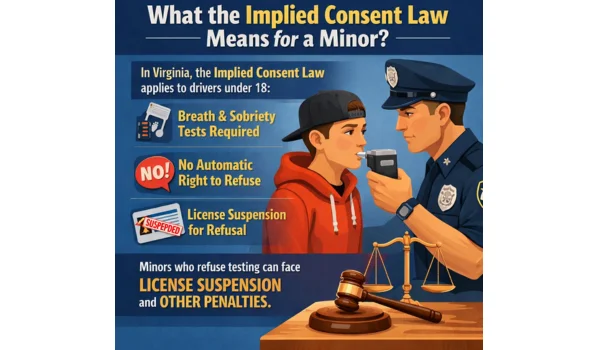
Many teens and parents hear the phrase “implied consent law” only after a traffic stop or DUI-related incident. For minors, this law can feel confusing—and the consequences can be serious, even without a criminal conviction.
So what does implied consent actually mean for a minor?
This article explains the concept in simple, easy-to-understand language, helping everyday readers understand their rights and responsibilities, while also offering clarity for law practices handling juvenile and DUI-related cases.
What Is the Implied Consent Law?
The implied consent law means that by driving a vehicle, a person automatically agrees to submit to certain chemical tests if law enforcement believes they are driving under the influence.
These tests may include:
- Breath tests
- Blood tests
- Urine tests (in some states)
You don’t have to say “yes” out loud—the consent is implied by the act of driving.
Does Implied Consent Apply to Minors?
Yes. Implied consent laws apply to minors just like adults, and in some ways, the rules for minors are even stricter.
If a minor:
- Drives a vehicle, and
- Is lawfully stopped by police, and
- Is suspected of alcohol or drug use
They are subject to implied consent testing.
Why Implied Consent Is Stricter for Minors
Most states follow a “zero tolerance” policy for underage drinking and driving.
That means:
- A minor does not have to be legally “drunk” to face penalties
- Even a small amount of alcohol can trigger consequences
Implied consent laws work together with zero-tolerance laws to discourage underage drinking and driving.
What Happens If a Minor Refuses a Chemical Test?
This is where many teens—and parents—get caught off guard.
Refusing a Test Can Lead to Automatic Penalties
In most states, if a minor refuses a chemical test:
- Their driver’s license may be suspended automatically
- The suspension often happens even if they are not convicted of DUI
- The penalties can be longer or harsher than for adults
Refusal is usually handled as an administrative penalty, not a criminal one.
Common Consequences for Minors Under Implied Consent Laws
Consequences vary by state, but often include:
- Immediate license suspension
- Longer suspension periods for refusal
- Mandatory alcohol education programs
- Fines and court fees
- Restricted or hardship licenses (sometimes unavailable to minors)
In many states, parents cannot override or undo these penalties.
Can a Minor Ask for a Parent Before Testing?
In most states:
- Police are not required to wait for a parent before administering a breath test
- A minor’s request to call a parent does not stop implied consent rules
- Delaying the test may be treated as a refusal
This surprises many families, but it is legally allowed.
Does a Minor Have the Right to Refuse?
Technically, yes—but refusal comes with consequences.
Important to understand:
- Refusal is not “free”
- The law treats refusal as a serious violation
- Administrative penalties apply automatically
In some situations, submitting to the test may actually lead to less severe consequences than refusing.
Is Implied Consent the Same as Giving Up Rights?
No.
A minor still has rights, including:
- The right to an attorney (though not always immediately)
- The right to challenge the stop or test later in court
- The right to due process
Implied consent only applies to chemical testing, not to questioning or searches beyond the scope of the stop.
How Implied Consent Cases Are Challenged
For law firms, common legal issues include:
- Whether the traffic stop was lawful
- Whether the officer had reasonable grounds
- Whether the minor was properly informed of refusal consequences
- Whether testing procedures were followed correctly
Mistakes in any of these areas can affect the outcome.
What Parents Should Know
Parents often assume:
- They must give permission for testing
- They can refuse on behalf of the minor
- They can immediately fix a license suspension
In reality:
- The implied consent law operates independently
- Administrative penalties move quickly
- Early legal guidance is critical
What Law Practices Should Know
For DUI and juvenile defense attorneys, implied consent cases involving minors often involve:
- Administrative license suspension hearings
- Zero-tolerance DUI statutes
- School and insurance consequences
- Long-term driving record implications
Key defense focus areas include:
- Procedural compliance
- Advisement accuracy
- Timely hearing requests
- Protecting future licensing rights
Frequently Asked Questions (FAQs)
Does implied consent mean a minor must always take the test?
No—but refusal carries automatic penalties.
Can parents refuse the test for their child?
Usually no. Implied consent applies directly to the driver.
Is refusal worse than failing?
Often, yes—especially for license suspension length.
Does this apply to drugs as well as alcohol?
Yes. Many states include drug testing under implied consent.
Final Thoughts: Knowledge Is Protection
The implied consent law means that minors who drive take on adult-level responsibilities, even if they don’t realize it at the time.
Key takeaways:
- Driving equals implied agreement to testing
- Refusal can trigger harsh penalties
- Minors face stricter rules than adults
- Early legal advice can make a major difference
Understanding these rules before a problem arises helps teens make safer choices—and helps parents know how to respond when things go wrong.
About the Author