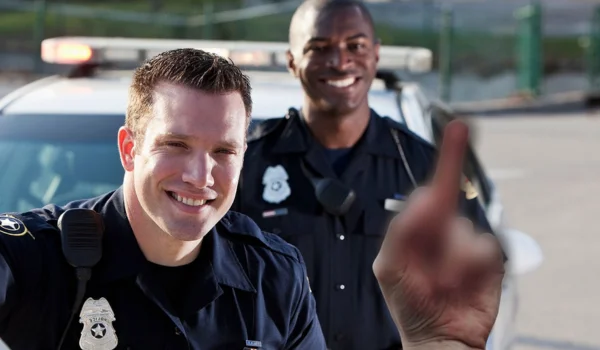
Getting angry in traffic or during a tense interaction with law enforcement is not uncommon. Some people express that frustration by raising the middle finger — a gesture often described as “flipping someone off.” But what happens when the target is a police officer? Many Americans wonder: is it illegal to flip off a cop?
The surprising answer is: usually, no.
In many situations, giving a police officer the middle finger is protected under the First Amendment as free speech or expressive conduct. Courts across the United States have repeatedly ruled that rude, offensive, or disrespectful gestures toward police are not automatically crimes.
However, that does not mean the situation is always simple. Depending on the circumstances, the gesture could still lead to police attention, temporary detention, or even charges if combined with other conduct such as threats, disorderly behavior, or obstruction.
Here is a detailed look at how U.S. law treats flipping off police officers, the role of the First Amendment, important court cases, and when legal problems can still arise.
Is Flipping Off a Cop Protected by the First Amendment?
In many cases, yes.
The First Amendment protects freedom of speech, including:
- Offensive speech
- Political criticism
- Symbolic gestures
- Profane expression
Courts have often ruled that the middle finger gesture qualifies as expressive conduct protected under the Constitution.
This protection exists because free speech rights are not limited to polite or respectful expression.
In fact, American courts have repeatedly emphasized that the government generally cannot punish people simply for insulting police officers.
Why Courts Protect Offensive Gestures
The legal system recognizes that free speech often includes:
- Anger
- Protest
- Criticism
- Vulgarity
If only polite speech were protected, constitutional protections would become much weaker.
That is why courts have defended various forms of offensive expression directed at government officials, including:
- Profanity
- Political insults
- Rude gestures
- Verbal criticism of police
The principle is that citizens have the right to criticize government authority, even in unpleasant ways.
Important Court Cases About Flipping Off Police
Several court cases across the United States have addressed this exact issue.
Cruise-Gulyas v. Minard (2019)
In this well-known federal appeals case, a woman gave a police officer the middle finger after receiving a traffic ticket.
The officer pulled her over again after seeing the gesture.
The court ruled that the gesture was protected speech under the First Amendment.
The judge even described the middle finger as an expression of dissatisfaction protected by constitutional rights.
Swartz v. Insogna (2013)
In another major case, a passenger flipped off a police officer while riding in a car.
The officer stopped the vehicle afterward.
A federal appeals court ruled that the gesture alone did not justify a traffic stop because the conduct was protected speech.
Can Police Still Pull Someone Over for Flipping Them Off?
Legally, the gesture alone usually is not enough to justify a stop in many jurisdictions.
However, real-world interactions can become more complicated.
An officer may claim the stop involved:
- Suspicious driving
- Traffic violations
- Disorderly conduct concerns
- Public safety issues
Even if charges are later dismissed, the interaction itself may still occur.
That is why constitutional rights and street-level police encounters are not always identical in practice.
Could Someone Be Arrested for Flipping Off a Cop?
Sometimes people are arrested, but courts frequently dismiss charges when the only conduct involved is the gesture itself.
However, legal trouble becomes more likely if the gesture is combined with:
- Threats
- Aggressive confrontation
- Physical interference
- Disturbing the peace
- Obstruction
The middle finger alone is usually protected, but surrounding behavior matters heavily.
Disorderly Conduct Laws and the Gray Area
Police sometimes use disorderly conduct statutes in confrontational situations.
Disorderly conduct laws vary by state but may involve:
- Creating public disturbances
- Fighting behavior
- Excessive noise
- Provoking violence
Courts generally hold that merely flipping off an officer does not automatically qualify as disorderly conduct.
Still, if the behavior escalates into:
- Screaming aggressively
- Inciting crowds
- Blocking traffic
- Physical confrontation
then additional legal issues may arise.
What If the Gesture Happens During a Traffic Stop?
Traffic stops are particularly sensitive situations.
While flipping off an officer may still be protected speech, doing so during an active stop could increase tension significantly.
Officers may become more cautious or suspicious, especially if:
- The driver appears aggressive
- Commands are ignored
- Safety concerns arise
Legally protected behavior does not always prevent uncomfortable or stressful encounters.
Is the Middle Finger Considered Hate Speech or Threatening Conduct?
Generally, no.
The middle finger is usually treated as:
- Insulting
- Vulgar
- Disrespectful
but not inherently threatening.
However, if combined with:
- Threatening words
- Violent gestures
- Weapons
- Intimidation
then prosecutors may argue the overall conduct crossed into criminal territory.
Context is extremely important.
Can Someone Sue Police for Arresting Them Over a Gesture?
Yes, in some cases.
People have filed civil rights lawsuits alleging violations of:
- First Amendment rights
- Unlawful detention rights
- Improper arrests
Some plaintiffs have successfully won settlements or court rulings when courts determined officers retaliated against protected speech.
Civil rights cases often focus on whether:
- Police had lawful justification
- The arrest was retaliatory
- Constitutional protections were violated
What About Flipping Off Police in Public Protests?
Political protests often involve strong language and provocative gestures.
Courts generally provide broad First Amendment protection for political expression, including criticism of law enforcement.
As long as protesters are not:
- Violent
- Threatening
- Blocking lawful police duties
offensive gestures alone are usually protected.
Can Minors Get in Trouble for Flipping Off Police?
Potentially, yes.
Juveniles may still face:
- School discipline
- Police interaction
- Disorderly conduct allegations
Even though constitutional protections still apply to minors in many situations, courts sometimes handle juvenile cases differently.
School-related incidents can become especially complicated because schools have broader authority to regulate student behavior.
Does State Law Matter?
Absolutely.
While federal constitutional protections apply nationwide, states differ regarding:
- Disorderly conduct laws
- Breach of peace statutes
- Police enforcement practices
Some jurisdictions may aggressively enforce public order laws, while others rarely pursue such cases.
Still, federal court decisions strongly support the idea that the middle finger gesture alone is protected speech.
Is It Illegal to Curse at a Police Officer?
Often, no.
Like flipping someone off, profanity directed at police is frequently protected under the First Amendment.
Courts have repeatedly ruled that:
- Criticism of police
- Profanity
- Offensive language
cannot automatically be criminalized simply because officers find it disrespectful.
However, threats or fighting words intended to provoke immediate violence may create legal issues.
What Are “Fighting Words”?
“Fighting words” are a narrow category of speech that may receive less constitutional protection.
These are words intended to:
- Directly provoke immediate violence
- Cause an immediate physical confrontation
Courts apply this doctrine narrowly today.
Most rude gestures or insults toward police do not automatically qualify as fighting words.
Why Free Speech Protections Matter in These Cases
The courts often emphasize an important principle:
Citizens must be allowed to criticize government officials without fear of punishment.
Police officers represent government authority. Because of that, courts usually require officers to tolerate more criticism and insult than ordinary private citizens.
That does not mean rude behavior is wise or respectful — only that constitutional protections often apply.
Real-World Consequences Beyond the Law
Even if flipping off a police officer is legally protected, it can still create practical consequences.
For example:
- Escalated tension
- Longer police interactions
- Increased scrutiny
- Emotional conflict
- Safety concerns
Constitutional rights do not guarantee pleasant interactions.
Many defense attorneys advise remaining calm during encounters with law enforcement, even when legally entitled to express frustration.
Social Media and Viral Police Encounters
Modern smartphones and social media have made police interactions far more public.
Videos involving:
- Traffic stops
- Verbal arguments
- Middle finger gestures
often spread online rapidly.
This public visibility sometimes influences:
- Public opinion
- Civil rights litigation
- Department investigations
Body cameras and phone recordings may also become evidence in legal disputes.
Common Misconceptions About Flipping Off Police
“You can always be arrested for disrespecting police.”
Not necessarily. Disrespect alone is usually not a crime.
“The First Amendment protects all behavior.”
False. Threats, violence, and obstruction are not protected.
“Police can stop anyone for offensive gestures.”
Courts have often ruled otherwise.
“Protected speech means there are never consequences.”
False. Protected speech may still lead to tense or inconvenient interactions.
Why These Cases Continue to Appear in Courts
These situations sit at the intersection of:
- Free speech rights
- Public order laws
- Police authority
- Civil liberties
Courts constantly balance:
- Government interests in safety and order
against - Constitutional protections for individual expression
The result is a legal system that generally protects offensive speech while still allowing police to intervene when conduct becomes threatening or dangerous.
Final Thoughts on Whether It Is Illegal to Flip Off a Cop
So, is it illegal to flip off a police officer in the United States?
In most cases, no. Courts across the country have repeatedly ruled that giving a police officer the middle finger is generally protected under the First Amendment as expressive speech.
However, the legal protection usually applies to the gesture alone. If the conduct escalates into threats, obstruction, disorderly behavior, or physical confrontation, criminal charges may still arise.
While constitutional rights protect many forms of offensive expression, that does not always prevent tense encounters with law enforcement in real-world situations.
The law may protect the gesture, but the practical consequences of the interaction can still be significant depending on the circumstances.
About the Author