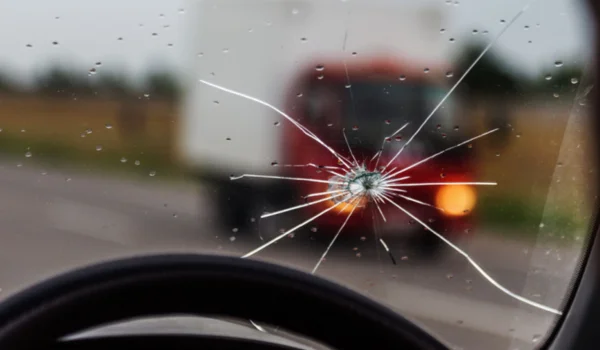
Driving with a cracked windshield — it might seem like a small risk, but legally and practically, it can become a serious issue depending on where you live. In the U.S., there’s no single nationwide law that bans cracked windshields. Instead, whether you can legally drive depends on state or local laws, and how badly damaged the glass is.
This article breaks down the key legal principles, common rules across states, potential penalties, and best practices you should follow if your windshield has a crack.
📚 Why It Depends — State-by-State Rules Matter
- There is no federal law that universally prohibits driving with a cracked windshield — except for certain commercial vehicles regulated under federal safety standards.
- For private/passenger vehicles, each U.S. state sets its own rules. What’s legal in one state may be illegal in another.
- Most laws focus on visibility and safety: if the crack or chip “obstructs,” “impairs,” or “interferes with” the driver’s view — the vehicle may be considered illegal to operate.
🔍 What Makes a Cracked Windshield “Illegal”? — Common Rules
Although laws vary, several common themes emerge across many states:
✅ Visibility matters.
- If a crack is in the driver’s direct line of sight (in front of the steering wheel, in the area the windshield wipers cover), it’s often prohibited.
- Chips or cracks that distort vision — or grow/spread into the driver’s view — are also likely to be considered violations.
✅ Size and pattern limits.
- Some states ban “starburst,” “spider-web,” or “bullseye” type cracks, especially if they exceed a certain size (for example, more than 3 inches by 3 inches under certain laws).
- Cracks extending to the edges of the windshield or intersecting with other cracks are often more problematic because they may weaken windshield integrity or obstruct view more.
✅ Placement matters.
- Damage outside the wiper-swept area, off to the passenger side, or low on the windshield — where it doesn’t obstruct the driver’s view — is less likely to be cited.
- But any crack that impairs visibility, even partially, can still be considered illegal under “obstructed view” laws.
🚨 What Happens if You Drive with an Illegal Crack
If law enforcement stops you and deems your windshield unsafe under local law:
- You may receive a traffic citation — often a “non-moving violation.”
- In many jurisdictions you may be issued a “fix-it” ticket: you must repair or replace the windshield and show proof within a set time (e.g. 30 days) to avoid further penalties.
- If your vehicle undergoes a required safety inspection (in states that mandate inspections), a cracked windshield may cause your vehicle to fail, preventing registration or renewal until fixed.
- More broadly, driving with a damaged windshield can increase risk in accidents (impaired visibility, structural weakness, possible ejection on rollover), which may impact insurance claims or liability.
🌎 Examples — How Different States Handle It
| State | Rule / What’s Illegal |
| California | Driving with any cracked or damaged windshield that impairs front or rear vision is illegal — officers can cite regardless of crack size or position. |
| Colorado | If windshield damage obstructs driver’s view or interferes with wipers, it’s illegal to drive the vehicle. |
| Georgia | Cracks with starburst or spider-web patterns larger than 3″×3″ — or any crack obstructing driver’s view — are prohibited. |
| Minnesota | The statute prohibits operating a vehicle with a windshield cracked or discolored “to an extent to limit or obstruct proper vision.” |
| Iowa | Law prohibits driving when the windshield or windows “do not permit clear vision.” |
These examples show that while the details vary, the underlying standard is consistent: no driving if driver’s view is obstructed or safety is compromised.
🧰 What You Should Do — Smart Steps for Drivers
- Inspect your windshield carefully. Cracks in the driver’s line of sight, large cracks, or any damage that distorts visibility or impairs wiper function should be addressed immediately.
- Repair or replace as soon as possible. Many minor chips can be repaired cheaply, before they expand into larger cracks. Waiting may increase cost and risk — legally and safety-wise.
- Check your state laws / local traffic code. Since laws vary widely, verify what’s allowed (size limits, permitted location of damage, inspection standards).
- Avoid “forward until worse” mentality. Even if you think your crack is minor — rain, sun glare, or night driving may worsen visibility and increase danger.
- Keep documentation. If you repair or replace the windshield, keep receipts. If you were issued a “fix-it” ticket, proof of repair is often needed to avoid fines.
✅ Final Thought: Better Safe — On Vision, Safety, and Legal Compliance
Yes — in many U.S. states, driving with a cracked windshield can be illegal when the damage impairs visibility or compromises safety. Even when it’s not clearly illegal, doing so is often unsafe and risky. For most drivers, the best—and smartest—approach is simple:
If your windshield is cracked, repair or replace it as soon as you reasonably can. Don’t wait for a ticket, inspection failure, or accident.
About the Author