
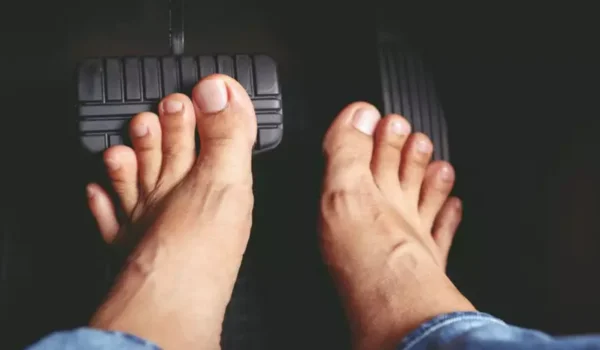
If you live or drive in Texas and wondered whether you can legally drive without shoes — the short answer is: yes — it’s legal. But that doesn’t mean it’s always safe or free of legal risk. Here’s a clear, easy-to-understand breakdown of what the law says (and what it doesn’t) — plus some smart advice if you choose to go shoeless behind the wheel.
📜 What Does Texas Law Actually Say?
- In Texas Transportation Code (and related traffic laws) there is no statute that explicitly prohibits driving barefoot.
- Therefore, law enforcement cannot legally pull you over and ticket you solely because you’re driving without shoes.
- In fact, no U.S. state has a statewide law that criminalizes barefoot driving.
So if someone tells you “it’s illegal to drive barefoot in Texas,” that’s a myth — an old belief not based on actual law.
⚠️ But — It Could Still Affect You in an Accident or Lawsuit
The fact that barefoot driving is legal doesn’t mean it’s risk-free. Here’s where complications might arise:
- Driving barefoot may be viewed as a factor in negligence or liability if it contributes to an accident. If it’s shown that lack of proper footwear made it difficult to control the pedals or brake properly, you could be found partially (or fully) at fault.
- Under the law, any unsafe driving leading to serious injury or property damage can trigger charges such as Texas Penal Code § 545.401 (reckless driving) — if the officer believes the footwear (or lack thereof) was a contributing cause.
- Insurers and courts may scrutinize pedal control in accidents — being barefoot might weaken your claim, or be used to argue that you failed to exercise reasonable care.
In short: no immediate penalty for bare feet — but higher risk if something goes wrong.
🚙 Why Many Advocates Recommend Wearing Shoes While Driving
Even though barefoot driving isn’t illegal, most safety experts and personal-injury lawyers recommend using proper footwear. Here’s why:
- Better pedal control: Shoes with good traction and a flat sole help you press the brake or accelerator more reliably — especially in sudden stops or emergencies.
- Reduced risk of slips or pedal errors: Bare feet or loose sandals (like flip-flops) can slip off or get caught, increasing the chance of pedal misapplication.
- Safer in crashes: In an accident, shoes can protect your feet from injury — bare feet are more vulnerable to scrapes, fractures, or burns (e.g. from hot pedals).
- Better consistency: Shoes give more predictable feedback from the pedals than bare feet — making it easier to judge braking force, especially with antilock brakes (ABS) or sudden maneuvers.
So while you don’t have to wear shoes — many drivers treat footwear as part of safe driving, not just comfort.
✅ What Should a Responsible Texas Driver Do?
If you live in Texas and think about driving barefoot, here are some smart practices:
- Know your state law — it’s allowed. No statute bans barefoot driving.
- Consider safety — keep a pair of secure, flat-soled shoes in your vehicle. If you prefer comfort when parked or walking, slip them on before you drive.
- Avoid unsafe footwear too — flip-flops, high heels, bulky boots or slippery soles can also impair pedal control.
- Use shoes especially for long drives, night driving, or heavy traffic — when reaction and precision count the most.
- If involved in an accident — expect shoes/footwear to be a factor in liability or insurance claims. Be prepared for scrutiny.
🧭 Final Verdict: Legal — But Not Risk-Free
In Texas, yes — driving barefoot is legal. There’s no ticket for shoeless driving per se. But legality doesn’t guarantee safety or immunity from liability. Driving barefoot may be legal, but it can still make it easier to make mistakes, slip on pedals, or have poor control — and in a crash, that choice could hurt you, legally and physically.
About the Author