Many drivers ask:
“Is it illegal to pass on the right?”
The answer in the United States is:
Not always.
In some situations, passing on the right is completely legal. In other situations, it can lead to:
- Traffic tickets
- Fines
- Accident liability
- Reckless driving charges
The legality depends on:
- State law
- Road conditions
- Lane markings
- Traffic flow
- Whether the maneuver was safe
Because traffic rules vary across states, many drivers become confused about when passing on the right is allowed and when it crosses the line into dangerous driving.
This guide explains U.S. laws on passing on the right, common mistakes drivers make, situations where it may be legal, and how to avoid tickets or accidents.
What Does “Passing on the Right” Mean?
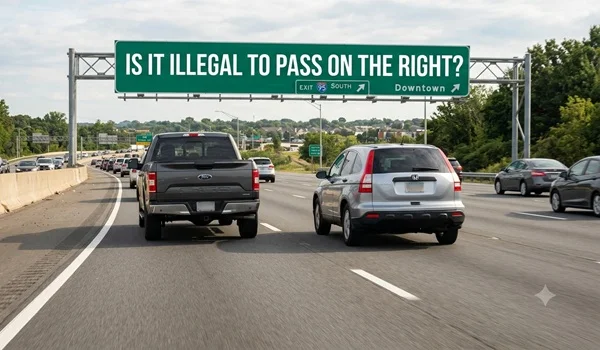
Passing on the right happens when a driver overtakes another vehicle using the lane or space to the right side instead of the left.
For example:
- A slow car is in the left lane
- Another driver moves into the right lane
- The driver overtakes the slower vehicle from the right side
This happens frequently on highways and multi-lane roads.
Is Passing on the Right Legal in the United States?
Yes — in many situations it is legal.
However, it must usually be done:
- Safely
- On properly marked roads
- Without driving off the roadway
Most states allow passing on the right under limited conditions.
When Passing on the Right Is Usually Legal
Here are common situations where passing on the right may be permitted.
| Situation | Usually Legal? |
| Multi-lane highway traffic | Often yes |
| Vehicle turning left | Usually yes |
| Roads with two or more lanes in one direction | Often yes |
| Using paved shoulder to pass | Usually no |
| Driving off-road to pass | Illegal in most states |
| Unsafe weaving through traffic | Often illegal |
State-specific laws still matter, but these are general nationwide patterns.
The Most Common Legal Situation: Multi-Lane Highways
On highways with multiple lanes going the same direction, drivers frequently pass on the right legally.
Example:
- Left lane traffic is slower
- A driver in the middle or right lane continues at normal speed
- The vehicle naturally passes slower left-lane traffic
This is common and usually lawful if done safely.
Passing a Vehicle Turning Left
Most states allow passing on the right when:
- The other vehicle is making a left turn
- There is enough room to pass safely
For example:
- A car stops waiting to turn left
- You carefully drive past on the right side
This is generally legal if:
- You remain on the roadway
- You do not drive onto sidewalks or shoulders
When Passing on the Right Becomes Illegal
Passing on the right becomes risky or illegal when drivers:
- Use the shoulder
- Leave the pavement
- Cut dangerously between vehicles
- Speed aggressively
- Ignore traffic laws
The key legal issue is often safety.
Why Passing on the Shoulder Is Usually Illegal
Many drivers mistakenly believe they can use the shoulder to bypass traffic.
In most states, this is illegal because shoulders are intended for:
- Emergencies
- Disabled vehicles
- Law enforcement
- Emergency responders
Using the shoulder to pass can lead to:
- Traffic citations
- Reckless driving charges
- Accident liability
Can You Get a Ticket for Passing on the Right?
Yes.
Police may issue tickets for:
- Unsafe lane changes
- Reckless driving
- Improper passing
- Speeding
- Aggressive driving
Even if passing on the right is technically allowed, unsafe execution can still violate traffic laws.
Why Left-Lane Drivers Cause Confusion
Many drivers become frustrated when slower vehicles stay in the left lane.
Some states have “keep right” laws requiring slower traffic to move out of the left lane.
Examples include states where:
- Left lanes are mainly for passing
- Slower drivers can be ticketed for blocking traffic
This leads many motorists to pass on the right instead.
Is Passing on the Right Dangerous?
It can be.
Drivers generally expect passing traffic to come from the left side. Because of this:
- Blind spots become a bigger issue
- Lane-change accidents may increase
- Drivers may not anticipate right-side passing
Risk increases especially when:
- Traffic is heavy
- Drivers weave between lanes
- Speed differences are large
Common Accidents Involving Right-Side Passing
Passing on the right is often involved in:
- Side-swipe crashes
- Blind-spot collisions
- Highway merging accidents
- Motorcycle crashes
- Aggressive driving incidents
Insurance companies may examine whether the passing maneuver was reasonable and lawful.
What Police Usually Look At
If an officer observes passing on the right, they may consider:
- Speed
- Traffic conditions
- Road design
- Safety
- Whether the driver used the shoulder
- Aggressive behavior
A calm and safe maneuver on a multi-lane highway is treated very differently from weaving aggressively through traffic.
State Laws Can Differ
Traffic laws vary significantly across the United States.
For example:
- Some states strictly regulate left-lane use
- Others focus mainly on unsafe driving
- Some states allow broader right-side passing
- Others impose tighter restrictions
Drivers should always check their own state traffic laws.
Can Passing on the Right Make You Liable in an Accident?
Potentially yes.
Even if passing on the right was technically legal, insurance companies or courts may still examine whether:
- The maneuver was safe
- The driver acted reasonably
- Speed contributed to the crash
- Lane changes were reckless
Liability often depends on the full facts of the accident.
What About Motorcycles?
Motorcyclists sometimes pass on the right in traffic, but laws vary by state.
Some states prohibit:
- Lane splitting
- Shoulder passing
- Unsafe filtering
Motorcycle-related passing laws remain controversial in many areas.
Is It Illegal to Pass on the Right in Heavy Traffic?
Not automatically.
On busy highways with multiple lanes moving in the same direction, vehicles constantly pass one another from different sides.
However, dangerous weaving or aggressive behavior may still violate:
- Reckless driving laws
- Speeding laws
- Unsafe lane change rules
What Is Considered Reckless Driving?
Reckless driving generally means operating a vehicle with dangerous disregard for safety.
Examples may include:
- Excessive speeding
- Aggressive weaving
- Tailgating
- Cutting off vehicles
- Passing dangerously
In serious situations, reckless driving can become a criminal offense rather than a simple ticket.
Safe Driving Tips When Passing on the Right
If you must pass on the right, follow these safety tips.
Check Blind Spots Carefully
Drivers may not expect you on the right side.
Avoid Sudden Lane Changes
Smooth movements reduce crash risks.
Never Use the Shoulder
This is illegal in most situations.
Maintain Safe Speeds
Large speed differences increase danger.
Watch for Merging Vehicles
Right lanes often contain entering traffic.
What To Do If You Get a Ticket
If you receive a citation:
- Read the violation carefully
- Review your state law
- Check whether the officer cited unsafe driving or improper passing
- Consider traffic school options
- Consult an attorney for serious charges
This is especially important if:
- An accident occurred
- Injuries were involved
- Reckless driving was alleged
Why Defensive Driving Matters More Than “Who Was Right”
Many crashes happen because drivers focus too much on:
- Traffic frustration
- Lane disputes
- “Teaching someone a lesson”
Even when another driver is blocking traffic improperly, aggressive passing can still create legal and safety problems.
Defensive driving usually protects both:
- Your safety
- Your legal position
Final Thoughts
Passing on the right is not automatically illegal in the United States. In many situations — especially on multi-lane highways — it is perfectly lawful when done safely and responsibly.
However, the legality depends heavily on:
- State laws
- Road conditions
- Driver behavior
- Whether the maneuver created danger
Passing on the shoulder, weaving aggressively, or driving recklessly can quickly turn a legal maneuver into a traffic violation or accident risk.
The safest approach is to:
- Stay patient
- Avoid aggressive driving
- Follow lane laws
- Pass only when safe
- Understand your state’s traffic rules
A few seconds saved on the road are never worth risking a serious accident, ticket, or liability dispute.