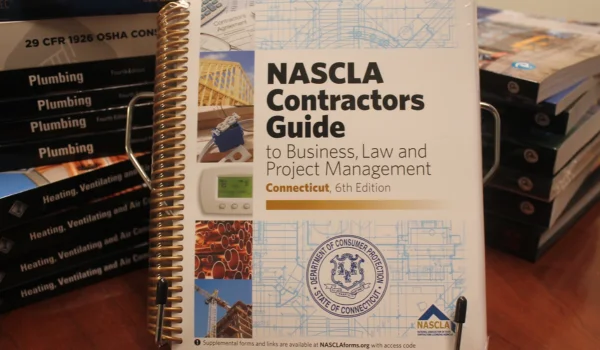
If you are preparing for a contractor’s license exam in the United States, you have likely heard of the NASCLA Contractors Guide to Business Law and Project Management. This book is one of the most important resources for contractors who want to operate legally, manage projects effectively, and pass licensing exams.
The guide is published by the National Association of State Contractors Licensing Agencies (NASCLA), an organization that works with state licensing boards to create consistent standards for contractor exams across the country.
In this article, we’ll break down:
- What the NASCLA Contractors Guide is
- Why it matters for contractors
- What topics it covers
- How it helps with licensing exams
- Why law practices and construction attorneys should understand it
- Practical tips for using the guide
This explanation is written in simple English, so both everyday readers and legal professionals can benefit.
What Is NASCLA?
The National Association of State Contractors Licensing Agencies (NASCLA) is a nonprofit organization that supports contractor licensing boards in many U.S. states.
Its goals include:
- Promoting consistent contractor licensing standards
- Improving construction industry regulation
- Supporting public safety
- Providing uniform exam materials
Many states use NASCLA materials for their contractor exams, especially for commercial general contractors.
What Is the NASCLA Contractors Guide?
The NASCLA Contractors Guide to Business Law and Project Management is a comprehensive textbook used for:
- Contractor licensing exams
- Business law education
- Project management training
- Construction company operations
It focuses on the business and legal side of construction, not just technical building skills.
In short, it teaches contractors how to run their business legally and professionally.
Why This Guide Is Important for Contractors
Most contractors are skilled in construction work — framing, plumbing, electrical, roofing, etc.
But running a construction business requires much more than technical skill.
Contractors must understand:
- Contracts
- Liens
- Insurance
- Taxes
- Employment law
- Financial management
- Risk management
The NASCLA Guide helps bridge that gap.
Without understanding business law, a contractor may:
- Lose money due to poor contracts
- Face lawsuits
- Fail licensing exams
- Violate state regulations
- Damage their reputation
Key Topics Covered in the NASCLA Guide
Let’s explore the major subjects included in the book.
- Business Organization and Licensing
The guide explains different types of business structures:
- Sole proprietorship
- Partnership
- Corporation
- Limited liability company (LLC)
It helps contractors understand:
- How to register a business
- State licensing requirements
- Contractor classification types
- Reciprocity between states
For law practices, this section is important when advising clients on proper business formation.
- Contract Law for Contractors
One of the most important sections covers contract law.
It explains:
- Elements of a valid contract
- Offer and acceptance
- Consideration
- Breach of contract
- Change orders
- Termination clauses
Contractors learn how to:
- Draft clear agreements
- Avoid vague language
- Protect themselves from disputes
For construction attorneys, this aligns closely with real-world litigation involving construction disputes.
- Project Management Basics
Project management is critical in construction.
The guide covers:
- Scheduling
- Critical path method (CPM)
- Cost estimation
- Resource allocation
- Time management
- Quality control
Contractors learn how to:
- Plan projects efficiently
- Avoid delays
- Manage subcontractors
- Control budgets
Poor project management often leads to legal disputes. That’s why this section is essential.
- Estimating and Bidding
Many contractors lose money due to poor estimates.
The guide explains:
- Direct costs
- Indirect costs
- Overhead
- Profit margins
- Competitive bidding
- Bid bonds
Understanding this protects contractors from underbidding and financial loss.
For lawyers, disputes often arise when bids are unclear or when pricing errors occur.
- Financial Management
Construction businesses require strong financial control.
The book covers:
- Reading financial statements
- Cash flow management
- Job costing
- Break-even analysis
- Budget control
Many contractors fail not because of poor workmanship, but because of poor financial planning.
- Employment and Labor Law
Contractors often employ:
- Laborers
- Subcontractors
- Office staff
- Project managers
The guide addresses:
- Employee vs. independent contractor rules
- Payroll obligations
- Workers’ compensation
- Safety regulations
- Anti-discrimination laws
Legal mistakes in employment law can result in heavy fines or lawsuits.
Law firms representing construction businesses frequently deal with employment disputes.
- Risk Management and Insurance
Construction is high-risk work.
The guide explains different types of insurance:
- General liability insurance
- Workers’ compensation
- Builder’s risk insurance
- Professional liability insurance
- Bonding requirements
It teaches contractors how to reduce legal exposure and financial risk.
- Safety and OSHA Compliance
Construction companies must comply with safety standards.
The guide includes information related to:
- Workplace safety rules
- Accident prevention
- Safety training
- Reporting requirements
Failure to follow safety rules can result in fines, lawsuits, and criminal penalties.
- Liens and Payment Laws
One of the most critical areas in construction law is lien rights.
The guide explains:
- Mechanic’s liens
- Payment bonds
- Notice requirements
- Collection procedures
This protects contractors when owners fail to pay.
For attorneys, lien law is a common area of construction litigation.
- Dispute Resolution
Disputes are common in construction.
The guide discusses:
- Negotiation
- Mediation
- Arbitration
- Litigation
It emphasizes preventing disputes through clear communication and documentation.
How the NASCLA Guide Helps with Licensing Exams
Many states use NASCLA materials for:
- Commercial General Contractor Exams
- Business & Law Exams
- Multi-state licensing tests
Some states even accept the NASCLA Accredited Examination Program, allowing contractors to transfer credentials between participating states.
The guide is often an open-book exam resource, meaning candidates can bring it into the test room. However, they must know how to quickly locate answers.
How Law Practices Can Use This Guide
For law firms working in construction law, the NASCLA Guide is valuable because:
- It reflects industry standards
- It shows what contractors are expected to know
- It highlights compliance requirements
- It explains practical business realities
Attorneys who understand this guide can:
- Draft stronger construction contracts
- Advise clients more effectively
- Anticipate common contractor mistakes
- Improve risk management strategies
Common Mistakes Contractors Make (That the Guide Helps Prevent)
- Using vague contracts
- Failing to document change orders
- Poor scheduling
- Ignoring safety compliance
- Misclassifying employees
- Underestimating project costs
- Not understanding lien deadlines
Each of these can lead to expensive legal problems.
Practical Study Tips for Contractors
If you are preparing for the exam:
- Read one chapter at a time
- Highlight key definitions
- Use tabs for quick reference
- Practice locating topics quickly
- Take practice exams
- Focus on understanding, not memorizing
Since many exams are open-book, speed and familiarity with the book are essential.
Why This Guide Matters Beyond the Exam
Passing the exam is only the beginning.
The real value of the NASCLA Contractors Guide is that it teaches contractors how to:
- Build a stable business
- Avoid lawsuits
- Manage projects efficiently
- Protect profits
- Stay compliant with state laws
It turns skilled builders into professional business operators.
The Bigger Picture: Business Law in Construction
Construction is one of the most legally complex industries in the U.S.
It involves:
- Multiple contracts
- Government regulations
- High financial stakes
- Tight deadlines
- Safety risks
The NASCLA Guide prepares contractors for these realities.
It emphasizes that:
Good project management prevents legal problems.
And that:
Strong business knowledge protects long-term success.
Final Thoughts
The NASCLA Contractors Guide to Business Law and Project Management is more than a test book. It is a practical manual for running a construction business responsibly and legally.
For contractors, it provides:
- Business knowledge
- Legal awareness
- Financial understanding
- Risk management skills
- Exam preparation support
For law practices, it offers:
- Insight into contractor education standards
- A framework for advising construction clients
- A reference point for industry expectations
In today’s competitive and highly regulated construction industry, understanding business law is not optional — it is essential.
A contractor who understands contracts, finance, safety, and compliance is far more likely to succeed and avoid costly disputes.
Whether you are preparing for your license or advising construction clients, the NASCLA Guide remains one of the most important resources in the field of business law and project management.