When Gov. Gavin Newsom signed SB 574 on Sept. 30, 2026, after a 39-0 Senate vote, California became the first state to put citation-checking duties for lawyers into statute, through a new Business and Professions Code section 6068.1 and an amendment to Code of Civil Procedure section 128.7 that takes effect Jan. 1, 2027. The law arrives alongside appellate rulings on expert evidence and damages and a civil caseload that the Judicial Council reports is still growing.
Expert Evidence and Damages Under Appellate Review
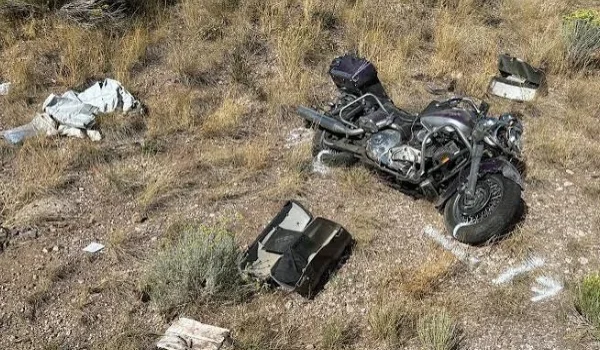
Victor Montez spent 40 days in the hospital after a drunk driver hit his car head-on in 2017, and a Los Angeles County jury in Judge J. Stephen Czuleger’s courtroom later awarded him and his wife $8,862,730, including $5,360,000 for future medical care. On May 15, 2026, the Second Appellate District, Division Seven, sent the economic damages back for retrial in an unpublished opinion, finding that a life care planner had testified to cost figures he never disclosed before trial (at deposition he said those numbers did not yet exist), and that his testimony was the jury’s only evidence of costs. Farmers, which had intervened after the driver stopped taking part in the case, brought the appeal.
Code of Civil Procedure section 2034.260 requires each expert designation to describe the general substance of the testimony the expert will give, and Montez shows what follows when trial testimony drifts past it. In Los Angeles County collision and premises claims, the designation is usually built from treatment records, billing ledgers and cost projections, and the work of a Beverly Hills personal injury attorney at a Wilshire Boulevard practice that handles car, truck, pedestrian, e-bike, slip-and-fall and wrongful death cases across California often centers on keeping those documents consistent with what each expert later says on the stand.
Reliability is policed separately, under the California Supreme Court’s 2012 decision in Sargon Enterprises v. University of Southern California, which arose from a dental implant maker’s lost-profits claim and directs trial judges under Evidence Code sections 801 and 802 to exclude speculative expert opinion. Damages rules have narrowed alongside it, since Howell v. Hamilton Meats (2011) limits past medical damages to amounts actually paid or incurred, and in Audish v. Macias (2024) the Fourth Appellate District allowed juries to weigh a plaintiff’s future Medicare eligibility when valuing future care; how far trial courts will extend Audish remains unsettled.
On Jan. 1, 2026, the temporary window in Code of Civil Procedure section 377.34 for recovering a decedent’s pre-death pain and suffering in survival actions closed, because SB 29 by Sen. John Laird, which would have extended it, did not pass. A year earlier SB 1107 had raised California’s minimum auto bodily injury coverage to $30,000 per person and $60,000 per accident, the first increase since 1967.
Caseload Pressure in Los Angeles County Superior Court
The Judicial Council’s 2026 Court Statistics Report counted 299,534 unlimited civil filings in fiscal 2024-25, more than 7% above the year before. Los Angeles County Superior Court, the largest consolidated trial court in the country, operates with 510 authorized judgeships.
The court absorbed a $30.3 million share of the $97 million cut to trial courts in the 2024-25 state budget, and then-Presiding Judge Samantha P. Jessner called the reductions “concerning and consequential.” Under her successor, Presiding Judge Sergio C. Tapia II, the court added automatically scheduled order-to-show-cause hearings and free mediation sessions through a volunteer attorney panel in 2025. In December 2025 the Daily Journal reported that civil filings in the court had grown 13% over the prior year and that attorneys still ranked backlogs and trial delays as its most serious problems.
What Changes for California Litigation in 2027
SB 574 traces back to Noland v. Land of the Free, a wage-and-hour appeal by a former leasing agent that the Second Appellate District decided in September 2025, the first published California opinion on AI-fabricated authority. The panel found that 21 of the 23 case quotations in the opening brief did not exist in the cited cases, ordered counsel to pay $10,000 to the court clerk and sent the opinion to the State Bar. According to a Daily Journal column by James Mixon, managing attorney of the Second District, the brief had been cross-checked with other AI tools that missed the errors. Sen. Tom Umberg, who is serving his final legislative term, told the Daily Journal that the bill makes clear “responsibility and judgment remain firmly with the professional,” though legal commentary published after the signing noted that the statute leaves open when AI “use” triggers its disclosure duty.
Three other measures are already scheduled:
- SB 66, signed in July 2025, deleted the Jan. 1, 2027, repeal date from Code of Civil Procedure section 2016.090, so the 2024 initial disclosure regime, with its 60-day response period and $1,000 sanction under section 2023.050, continues indefinitely.
- AB 747 requires process servers, starting Jan. 1, 2027, to attempt personal service at least three times on different days and to back each attempt with time-stamped photographs and GPS data.
- Litigation funders and private equity firms will be barred by AB 2305, according to the Consumer Attorneys of California, from directing a lawyer’s decisions about whether or how to settle.
Stages of a Personal Injury Case in California
The general deadline for personal injury suits is two years under Code of Civil Procedure section 335.1, while claims against a city, county or other public entity usually start with a written government claim due within six months under Government Code section 911.2; tolling rules, including those for minors, can change both periods.
After a complaint is filed, a case typically passes through these points:
- Once any represented party serves a demand for initial disclosures, every represented party owes witness names, relevant documents and insurance information.
- Expert witness exchanges under sections 2034.210 through 2034.260 fix the scope of opinion testimony, the issue that decided Montez.
- Since Jan. 1, 2025, section 437c has required a summary judgment motion to be served at least 81 days before its hearing, with one motion per party unless the court grants leave.
- Jury selection in civil trials has been governed since Jan. 1, 2026, by section 231.7, a statute that previously applied only to criminal cases.
How each step plays out depends on the facts, the judge and the county.
What to Watch in 2027
SB 574, AB 747 and AB 2305 take effect on Jan. 1, 2027, and the Judicial Council must revisit its standard on judicial use of generative AI. The next Court Statistics Report will show whether civil filings kept rising in fiscal 2025-26, and Montez, as an unpublished opinion, cannot be cited as precedent under California Rules of Court, rule 8.1115.
This article is for general informational purposes only and does not constitute legal advice.