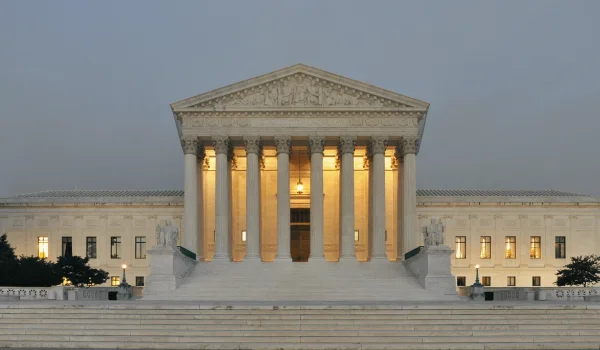
The U.S. Supreme Court has agreed to examine the constitutionality of a nearly 160-year-old federal law that prohibits Americans from distilling alcoholic spirits at home for personal consumption. The decision could reshape the legal boundaries between federal tax enforcement and individual freedom, potentially affecting people who want to make whiskey, vodka and other distilled beverages as a hobby.
On October 19, 2026, the Supreme Court agreed to hear Department of Justice v. McNutt, a case challenging the federal prohibition enacted during the Reconstruction era. The law was introduced to help prevent tax evasion involving distilled spirits, but opponents argue that Congress exceeded its constitutional authority by banning home distilling instead of relying on taxation and registration requirements.
The case comes after two federal appeals courts reached conflicting conclusions about the law. The Supreme Court’s review will address that disagreement and determine whether the federal government can constitutionally prohibit home distilling as a means of collecting excise taxes.
What Is the Federal Home Distilling Ban?
Federal law generally prohibits individuals from producing distilled spirits in a private residence or in certain structures connected to a home. The restriction appears in Section 5178(a)(1)(B) of the Internal Revenue Code, while Section 5601(a)(6) establishes criminal penalties for unlawful distilling.
Under the existing law, violations can carry penalties of up to five years in prison and a $10,000 fine, according to Reuters’ reporting.
The restriction applies even when someone wants to produce spirits solely for personal or family consumption rather than for sale.
This makes home distilling different from homebrewing beer or making wine. Federal law generally permits individuals to produce limited quantities of beer and wine at home for personal or family use, subject to applicable conditions. Distilling spirits remains subject to a separate and stricter federal framework.
The dispute before the Supreme Court concerns whether Congress has the constitutional authority to impose this particular prohibition.
Why Was Home Distilling Banned in 1868?
The origins of the law date to the Reconstruction era following the American Civil War, which ended in 1865.
Federal taxation of distilled spirits has an even longer history. In the early years of the United States, the federal government relied on excise taxes on products such as whiskey to raise revenue. Those taxes contributed to the Whiskey Rebellion of 1794, when opposition to the federal whiskey tax led to armed resistance in western Pennsylvania.
In 1868, Congress enacted legislation imposing taxes on distilled spirits and tobacco while strengthening measures intended to prevent tax evasion.
Home distilling presented an enforcement challenge: spirits produced privately could be difficult for federal authorities to monitor, measure and tax. Congress therefore restricted where distilleries could operate, creating a prohibition that has remained in federal law for more than a century and a half.
Supporters of the law argue that the restriction is a legitimate way to protect federal tax revenue. Critics contend that a government may not automatically prohibit private activity merely because it would be difficult to tax.
That constitutional disagreement is now before the nation’s highest court.
How Did the Supreme Court Case Begin?
The dispute arose when hobby distillers sought permission to produce spirits at home and challenged the federal government’s refusal to authorise the activity.
Scott McNutt and the Hobby Distillers Association were among the plaintiffs who argued that the prohibition exceeded Congress’s constitutional powers. They sought legal relief after federal authorities indicated that they would not issue permits for producing beverage spirits at a residence.
In November 2023, representatives for the challengers contacted the Alcohol and Tobacco Tax and Trade Bureau (TTB) to ask whether home distilling for personal consumption could be authorised. The agency reportedly said that federal law prohibited the activity.
The plaintiffs subsequently filed a lawsuit against the U.S. Department of Justice and the TTB, arguing that the ban violated constitutional limits on federal authority. The case was heard in federal court in Texas before reaching the U.S. Court of Appeals for the Fifth Circuit.
Why Did Federal Appeals Courts Disagree?
The Supreme Court’s intervention became necessary after the Fifth and Sixth Circuits reached opposite conclusions about the constitutionality of the restriction.
Fifth Circuit: The Ban Is Unconstitutional
On April 10, 2026, the Fifth Circuit ruled against the federal government in McNutt v. Department of Justice.
The court concluded that the home-distilling prohibition exceeded Congress’s authority under the Constitution’s Taxing Clause and Necessary and Proper Clause. In its view, banning home production was not a constitutionally justified way to collect federal excise taxes.
The ruling affirmed a 2024 decision by U.S. District Judge Mark Pittman in the Northern District of Texas, with modifications to the judgment.
The Fifth Circuit’s decision provided a legal victory for the plaintiffs, although its effect was tied to the litigation and the court’s order. It did not establish a nationwide right to distil spirits at home.
Sixth Circuit: The Ban Is a Valid Tax Enforcement Measure
On April 21, 2026, the Sixth Circuit reached the opposite conclusion in a separate case involving Ohio brewery owner John Ream.
The court upheld the federal restriction, reasoning that Congress could reasonably conclude that prohibiting home distilling would help prevent the production of untaxed spirits.
The majority considered the prohibition a necessary and proper means of enforcing the federal excise tax. A dissenting judge also questioned whether Ream had established sufficient legal standing to challenge the law.
The conflicting rulings created a split between federal appeals courts, making Supreme Court review especially important.
What Constitutional Question Will the Supreme Court Decide?
The central question is whether Congress can prohibit the production of distilled spirits in a person’s home as a necessary and proper means of collecting federal taxes.
The Constitution grants Congress the power to lay and collect taxes. It also allows Congress to enact laws necessary and proper for carrying out its enumerated powers.
The federal government argues that home distilling creates a substantial tax-enforcement problem. If individuals could produce spirits privately without adequate oversight, officials might struggle to determine how much alcohol was produced and whether the required tax had been paid.
The challengers argue that the government cannot turn its power to tax into a general power to prohibit otherwise private conduct. They maintain that the federal government could pursue less restrictive methods of tax enforcement.
The Supreme Court agreed to review the case against the background of the conflicting appeals-court decisions. Its decision could clarify how far Congress may go when restricting private activity to enforce a federal tax.
What Does the Case Mean for Home Distillers?
The outcome could have important consequences for Americans who want to make spirits for personal consumption.
If the Supreme Court upholds the ban, the existing federal prohibition would remain in place, subject to the ruling’s reasoning and scope.
If the Court strikes down the restriction, it could remove a major federal legal barrier to home distilling. However, that would not automatically eliminate every requirement governing alcohol production.
Other federal laws, tax obligations, state restrictions and local rules could still apply. The precise consequences would depend on the Court’s judgment and any subsequent regulatory or legislative action.
Home distilling also presents safety risks. Distillation involves flammable alcohol vapours, heated equipment and potentially dangerous pressure conditions. Anyone considering the activity should understand the applicable legal requirements and safety hazards rather than assume that the Supreme Court’s decision to hear the case grants permission to begin.
When Will the Supreme Court Issue Its Decision?
The Court agreed to take up the case on October 19, 2026. Oral arguments are expected during the Court’s 2026–2027 term, with a decision anticipated by the end of June or early July 2027, according to CBS News.
Until the Court issues its ruling, the case remains unresolved. The decision to grant review does not itself overturn the existing federal law.
Conclusion
The Supreme Court’s decision to review the federal home-distilling ban puts a longstanding alcohol regulation and an important constitutional question under national scrutiny.
The prohibition dates to 1868, when Congress sought to protect federal tax revenue by restricting private distilling. More than 150 years later, hobby distillers are challenging whether that approach remains within the constitutional powers of Congress.
The conflicting decisions from the Fifth and Sixth Circuits have made the Supreme Court’s review significant for both alcohol regulation and the limits of federal authority.
For now, home distilling remains subject to existing federal restrictions. The Supreme Court’s eventual ruling will determine whether Congress can continue using a categorical prohibition as a tool for enforcing federal taxes on distilled spirits.